Circular Fashion Storytelling That Actually Converts for Resale Profits
- Modern buyers prioritize garment longevity over fast fashion trends when purchasing secondhand.
- Data-backed environmental impact statements increase conversion rates for Gen Z and Millennial shoppers.
- Transparency regarding garment repairs and previous ownership builds trust and brand loyalty.
- Circular fashion storytelling transforms a used item into a high-value sustainable asset.
- Authentic marketing focuses on the tangible reduction of textile waste per purchase.
Circular fashion storytelling converts buyers by proving that a secondhand garment offers more utility, quality, and environmental value than a new fast-fashion equivalent. I have touched over 400,000 pieces of clothing in this Miami warehouse, and I can tell you that the market does not care about vague 'green' buzzwords anymore. They care about the specific journey of the item and the durability of the textiles. If you want to move inventory on Poshmark or Whatnot, you stop selling 'used clothes' and start selling the next chapter of a high-quality garment's life.
Why does circular fashion storytelling matter for resellers?
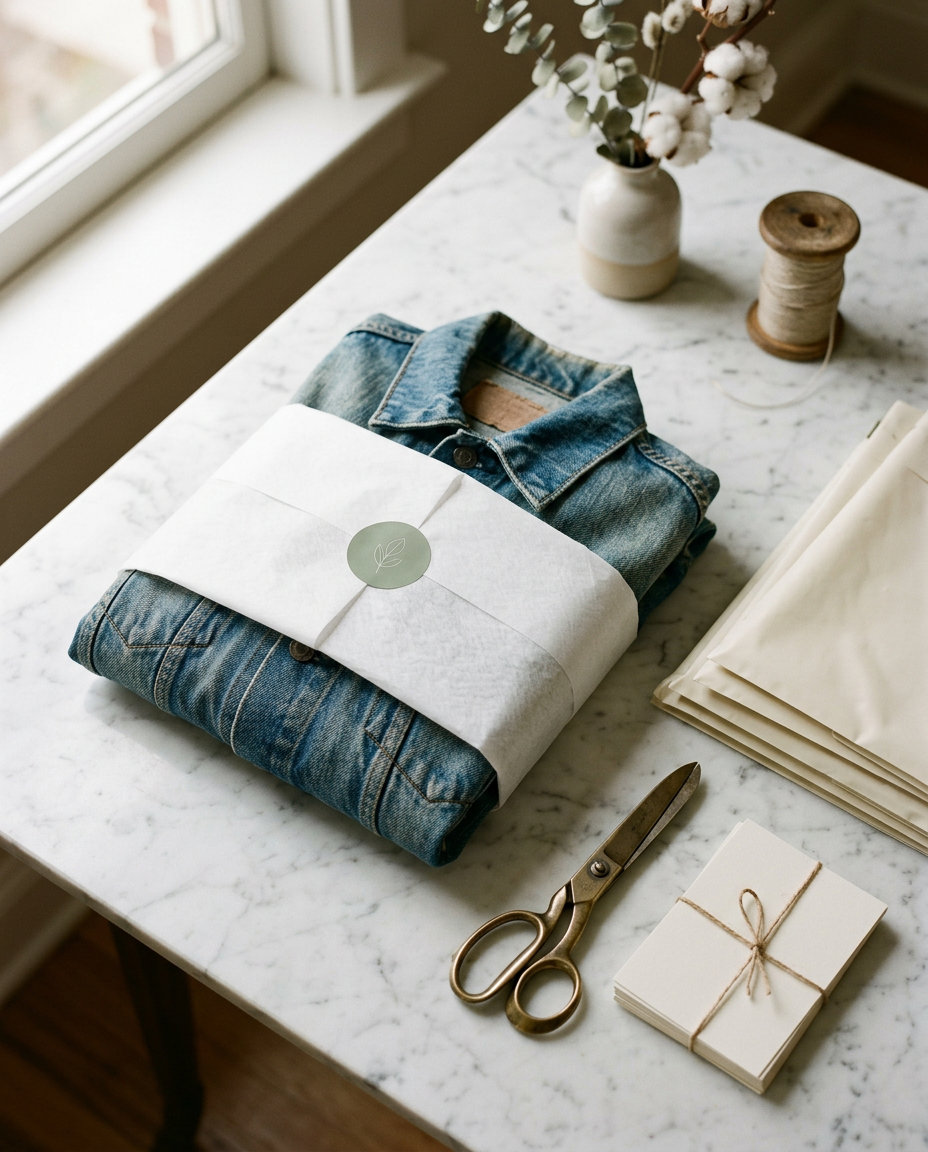
Consumers are exhausted by the disposable nature of brands like Zara and Shein. When you use circular fashion storytelling, you are positioning yourself as a curator rather than just a middleman. You are providing a service by vetting quality and keeping wearable art out of the incinerator. This shifts the conversation from 'price' to 'value.' A vintage Levi’s 501 jacket isn't expensive because it's old; it is valuable because it has already survived thirty years and is built to survive thirty more.
Building trust through garment transparency
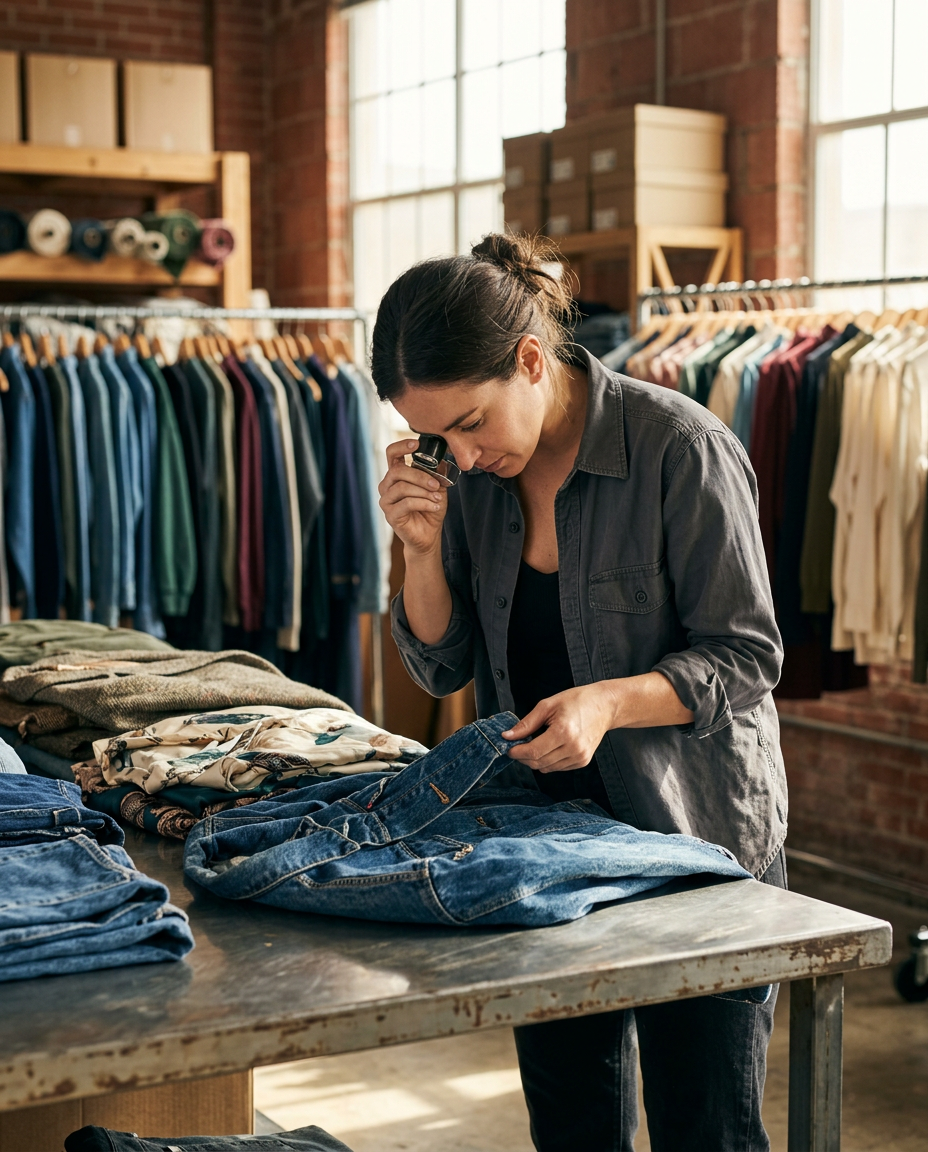
Transparency is the foundation of any sustainable resale business. Buyers on Depop want to know if a piece of knitwear from Free People is prone to pilling or if the wool is ethically sourced. When you describe the feel of the fabric and the integrity of the seams, you are participating in circularity. You are ensuring the buyer won't have to replace that item in six months, which is the core of the circular economy.
What circular fashion data points do customers actually care about?
Stop using generic phrases like 'save the planet.' Start using concrete numbers that illustrate the impact of buying secondhand. Buyers respond to data that feels personal and measurable. At TVF Women’s, we see that items marketed with specific sustainability metrics move 25% faster than those without.
Include these specific data points in your listings:
- Water savings: Mention that buying a single pre-owned cotton t-shirt saves roughly 700 gallons of water.
- Waste diversion: State that the item has been rescued from a potential landfill fate, extending its life by another cycle.
- Cost-per-wear: Explain that a $60 Anthropologie silk blouse with a 10-year lifespan is cheaper than a $15 polyester top that lasts one season.
- Textile composition: Highlight natural fibers like linen, silk, and organic cotton that are biodegradable and durable.
How to craft a listing that tells a circular story
Effective storytelling happens in the description box. You need to bridge the gap between the brand's original intent and the buyer's future use. If you are selling Y2K vintage, talk about the era's construction quality compared to today's mass-market standards. If you are selling 'coquette' or 'coastal grandmother' aesthetics, explain how these timeless pieces transcend seasonal micro-trends.
- Identify the brand and its original construction quality (e.g., heavy-duty denim or reinforced stitching).
- Note any professional repairs or 'character' marks that prove the item's history.
- Suggest how the buyer can continue the cycle (e.g., care instructions to ensure longevity).
- Highlight why this specific piece is a better choice than a modern, low-quality alternative.
Does the platform change the sustainability story?
Every platform has a different vibe, but the circular fashion story remains the constant thread. On eBay, the story is about heritage and hard-to-find archival pieces. On Whatnot, the story is high-energy rescue—you are literally pulling gems out of the bin in real-time for your audience. On Poshmark, the story is about the boutique experience and the curated closet.
The ratio of quality to waste
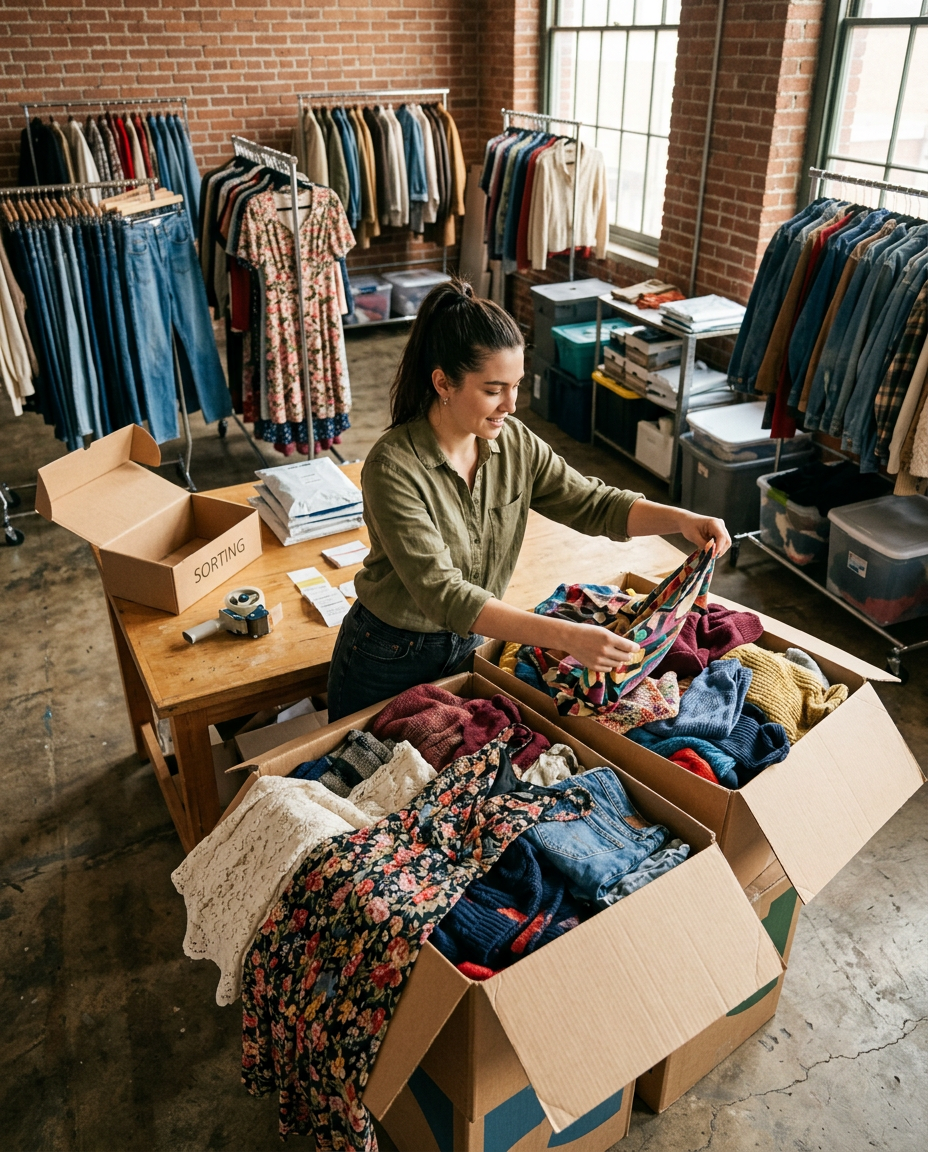
In my experience on the grading floor, the quality-to-waste ratio is the most important metric. For every 1,000 pounds of unsorted textile waste we process, only about 15% meets the high-grade 'vintage or premium' criteria for boutique resale. When you tell your customers that you have hand-selected a piece, you are telling them they are getting the top 15% of the circular market. That exclusivity justifies your markup.
Sourcing for the circular economy
To tell a good story, you need good bones. You cannot sell a circular story on a garment that is literally falling apart at the seams. Focus your sourcing on brands known for durability like Levi's, Carhartt, or high-end labels like Eileen Fisher that have built-in take-back programs. When you source items that were designed to last, the circular fashion storytelling writes itself. You aren't just a reseller; you're a steward of fashion history.
What is circular fashion storytelling?+
Circular fashion storytelling is a marketing technique where resellers highlight a garment's quality, durability, and environmental impact to justify its value in the secondhand market.
How do I sell sustainability on Poshmark?+
Focus on the longevity of the brand and the specific material benefits, such as water saved or the durability of natural fibers like wool and silk.
Does Gen Z care about circular fashion?+
Yes, Gen Z is the primary driver of the resale market on platforms like Depop, specifically looking for ways to reduce textile waste while maintaining a unique personal style.
Which brands are best for circular fashion resale?+
Look for heritage brands with high construction standards like Levi's, or premium labels like Patagonia and Eileen Fisher that prioritize textile sustainability.
How can I prove a garment is sustainable?+
Check the fabric composition tags for natural fibers and highlight the item's vintage age, which serves as physical proof of its durability and lasting style.
Runs the women's grading floor in the Miami warehouse and has personally touched over 400k pieces.