Mastering the Pricing Ladder to Sell Wholesale Women's Tops Fast
- A three-tier pricing ladder recovers the total case cost within the first thirty percent of sales.
- Categorize women's tops by brand tier, material quality, and current trend relevance like the coquette or coastal grandmother aesthetics.
- Use low-cost basics as 'loss leaders' or bundle bait to drive traffic to high-margin vintage listings.
- Dynamic pricing adjustments on platforms like Depop are necessary every twenty-one days to maintain inventory velocity.
- Anchor your highest price points with authenticated designer labels or rare 1990s Y2K pieces.
A pricing ladder for women's tops is a tiered valuation strategy that divides a wholesale case into three distinct price brackets to optimize cash flow and total profit. I have spent twelve years digging through dusty warehouse liquidations and sun-drenched flea markets, and I have learned that you cannot price a bulk lot of two hundred garments at a flat rate. You must treat every case like a portfolio. By identifying your 'anchors' and your 'velocity pieces,' you ensure that you aren't just sitting on inventory, but actively turning it into capital for your next haul.
How does a pricing ladder increase sell-through rates?
A pricing ladder ensures that every item in a wholesale case serves a specific financial purpose. In a standard twenty-five-pound case of women's tops, you will likely find a mix of contemporary brands like Zara and Anthropologie alongside true vintage treasures. If you price everything at a mid-range $25, you will stall. The basic tanks won't sell because they are overpriced, and the rare 1970s silk blouses will sell instantly, leaving you with 'money left on the table.'
The Three Tiers of a Successful Case
- The Velocity Tier (40% of inventory): These are your bread-and-butter items. Think basics from J.Crew or modern Levi's tees. Price these for quick turnover on Whatnot or as add-ons in Poshmark bundles.
- The Bread-and-Butter Tier (50% of inventory): This is the core of your shipment. Items like Free People tunics or Y2K-era graphic baby tees fall here. These should represent your target average sale price (ASP).
- The Anchor Tier (10% of inventory): These are the gems. A pristine 1990s Vivienne Westwood top or a heavy silk 1940s blouse. These pieces carry the prestige of your shop and justify higher margins.
What are the specific price points for women's resale tops?
When I source a case for TVF Women's, I look for a mix that allows a reseller to hit specific psychological price points. For a case with an average unit cost (AUC) of $6.00, your ladder should look like this:
- Tier 1 (Basics): $12 - $18. These cover your overhead and shipping.
- Tier 2 (Trends): $28 - $45. These are the Coastal Grandmother linens and Coquette lace tops that buyers are actively searching for on Depop.
- Tier 3 (Grails): $75 - $150+. These are the rare finds that define your brand identity.
How do you categorize inventory for a pricing ladder?
Categorization requires a keen eye for fabric and provenance. I always start by feeling the weight of the textile. Natural fibers like silk, linen, and heavy-weight cotton automatically move up the ladder. Next, I look at the label. A modern Zara top is a Tier 1 item unless it is a highly sought-after limited edition. An older 'big E' Levi's piece or a 1980s Laura Ashley floral top immediately jumps to Tier 3 due to the current demand for cottagecore and vintage Americana.
Steps to Process a Wholesale Case
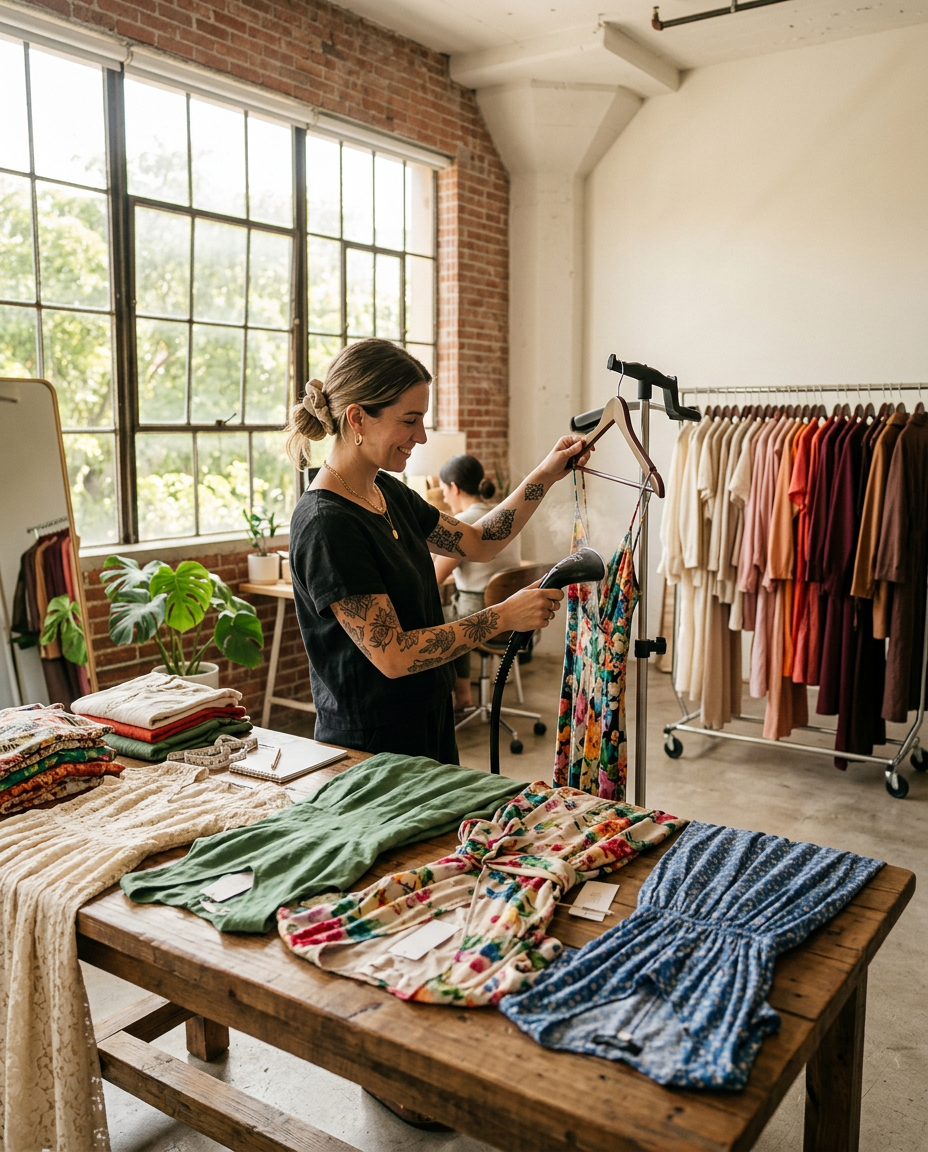
- Sanitize and Steam: Presentation is everything. A wrinkled top looks like Tier 1; a steamed top looks like Tier 3.
- Research the Label: Use the eBay 'Sold' listings filter to see what specific brands and eras are currently fetching.
- Check for Defects: A tiny moth hole in a cashmere sweater moves it from a Tier 3 anchor to a Tier 1 project piece.
- Photograph with Intention: Use editorial styling for your Anchor pieces to justify the higher price tag.
Why is the anchor piece critical for bulk liquidations?
The anchor piece is the psychological hook for your entire shop. Even if a customer doesn't buy the $120 vintage corset, that item brought them into your digital storefront. Once they are there, they are significantly more likely to purchase two or three items from your $25 Bread-and-Butter tier. In my experience, one strong anchor piece can pay for 20% of the entire case cost. This reduces the pressure on your smaller items to perform perfectly, allowing you to be more competitive with your pricing on Poshmark.
How do you adjust prices when inventory doesn't move?
If your Tier 2 items haven't moved in twenty-one days, you must be aggressive. I recommend a 'Markdown Monday' approach. Lower the price by 15% or move the item into a '3 for $50' bundle category. Stagnant inventory is a liability. By moving a Tier 2 item down to Tier 1, you free up the capital to buy a fresh case from TVF Women's. Velocity is the only way to scale a six-figure resale business.
What is the best pricing ladder for women's tops on Whatnot?+
For live auctions, start Tier 1 items at $1 to drive engagement, set Tier 2 items at a $15 starting bid, and run Tier 3 vintage anchors at a fixed price or high-start auction to protect your margins.
How do I identify a Tier 3 vintage top?+
Look for unique construction details like union labels, metal zippers, or single-stitch hems, and prioritize high-demand eras like the 1990s Y2K aesthetic or 1970s bohemian styles.
What brands should I put in Tier 1?+
Tier 1 should include mass-market contemporary brands like Old Navy, H&M, and basic pieces from Zara or Loft that have high supply and lower resale demand.
How does a pricing ladder improve cash flow?+
By selling Tier 1 basics quickly at lower prices, you recover your initial wholesale investment fast, which allows you to hold Tier 3 items longer for the maximum possible profit.
Twelve years buying vintage women's wear across estate sales, flea circuits, and warehouse liquidations.