The Brutal Truth About Profit Margins on Bulk Wholesale Clothing
- Buying wholesale cases at $2 to $4 per unit allows resellers to maintain a 5x to 10x ROI on mid-market brands.
- Inventory at this price point is specifically designed for high-velocity sales channels like Whatnot auctions and Depop bundles.
- Success with bulk inventory requires a strict processing workflow to ensure fast listing and high turnover.
- A 15% duds rate is mathematically expected in unmanifested bulk cases and must be factored into the initial cost of goods sold.
- Mixing high-margin vintage pieces with volume-based modern labels creates a balanced and sustainable resale business model.
The economics of $2-$4/piece women's wholesale cases rely on a high-velocity turnover strategy where volume-based profits outweigh the per-unit margin of luxury goods. If you are paying $40 for a single designer blazer, you are playing a different game than someone buying 100 units for the same price. In the Miami warehouse, I see thousands of pieces move through the grading floor daily, and the resellers who make the most money are the ones who treat their inventory like a commodity, not a collection. When your cost of goods sold (COGS) is under $5, your risk profile drops to near zero, provided you have the infrastructure to move the product fast.
Why is the $2 to $4 price point the sweet spot for resellers?
Inventory priced between $2 and $4 per unit provides the necessary margin for sellers to withstand market fluctuations and platform fees. This price bracket typically includes unmanifested mix cases of modern brands like Free People, Madewell, and Zara, alongside Y2K staples and high-street basics. For a seller on Whatnot, a $2 unit can be started at a $5 bid and still result in a profit after fees, whereas a $15 unit requires a much higher entry point that might stall an auction.
The impact of low COGS on platform fees
Selling on Poshmark or eBay involves commission structures that eat into your bottom line. When your unit cost is $3, a $20 sale leaves you with roughly $13 in net profit after a 20% fee and initial cost. That is a 333% return on investment. If you buy a 'buy-to-sell' item for $12 and sell it for $25, your net profit drops significantly once you factor in shipping supplies and labor. Low-cost wholesale cases protect your labor time by ensuring every sale contributes a higher percentage of pure profit.
How do you calculate the real ROI on a bulk clothing case?
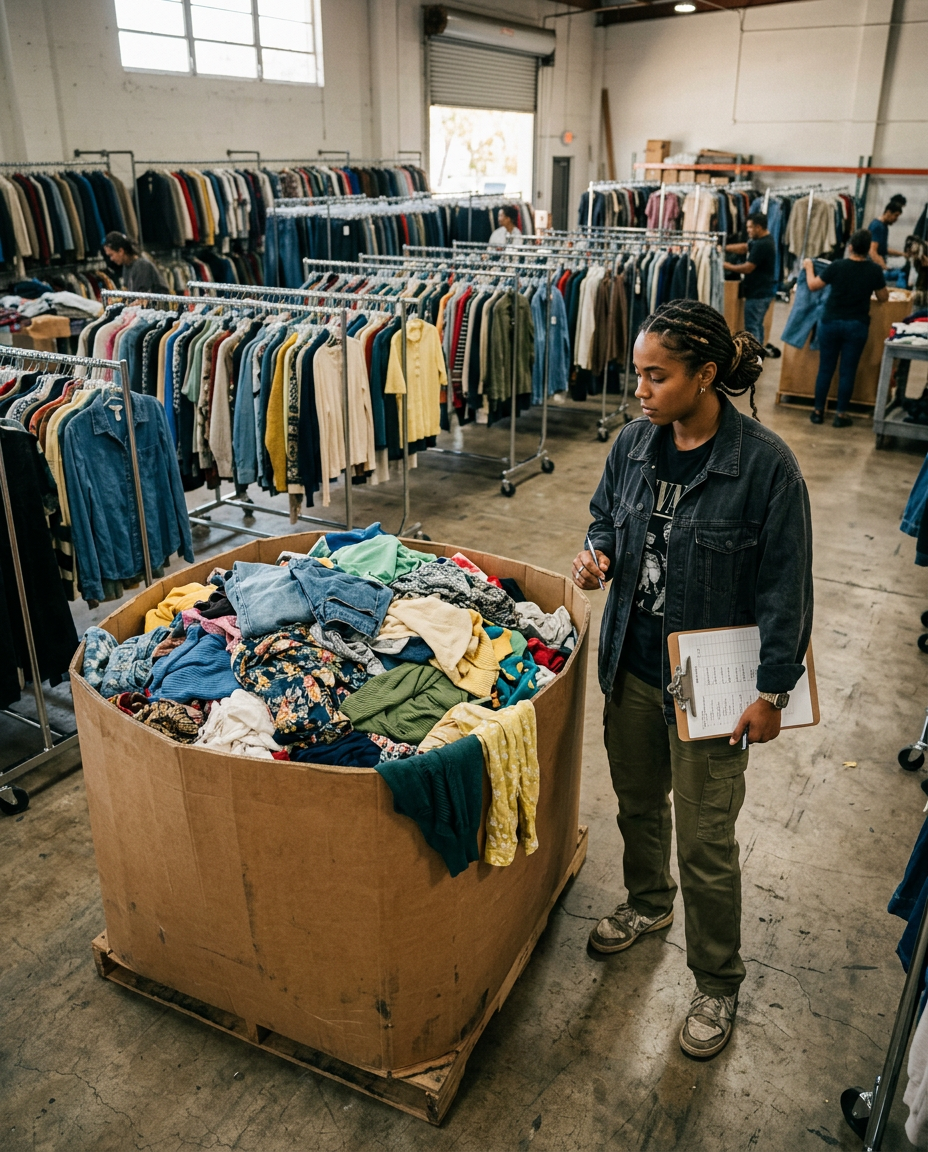
To find your true profit, you must subtract the 'dud rate' from your total unit count before calculating your average cost per sellable item. No bulk case is 100% perfect; that is the nature of secondhand apparel. We tell our buyers to expect a specific ratio of 'A-Grade' to 'B-Grade' items.
- A-Grade (80-85%): High-demand brands like Levi's, Anthropologie, or trendy Y2K pieces ready for immediate listing.
- B-Grade (10-15%): Items with minor wash wear or missing tags that are better suited for $5 'clearance' shows or bundle deals.
- Duds (5%): Items with unrepairable damage that should be donated or recycled.
If you buy a 100-piece case for $300, your nominal cost is $3 per piece. If 10 pieces are unsellable, your adjusted COGS is $3.33 per piece. If you sell the remaining 90 pieces for an average of $18, your gross revenue is $1,620 against a $300 investment.
What brands drive the most value in wholesale cases?
Resellers look for 'bread and butter' brands that have high search volume and consistent sell-through rates. While luxury labels are great, the $2-$4 cases are built on the backs of reliable mall brands and fast-fashion giants that consumers buy every single day.
- Free People and Anthropologie: These labels have a cult following on Depop and Poshmark, often selling for $25-$45 even for basic styles.
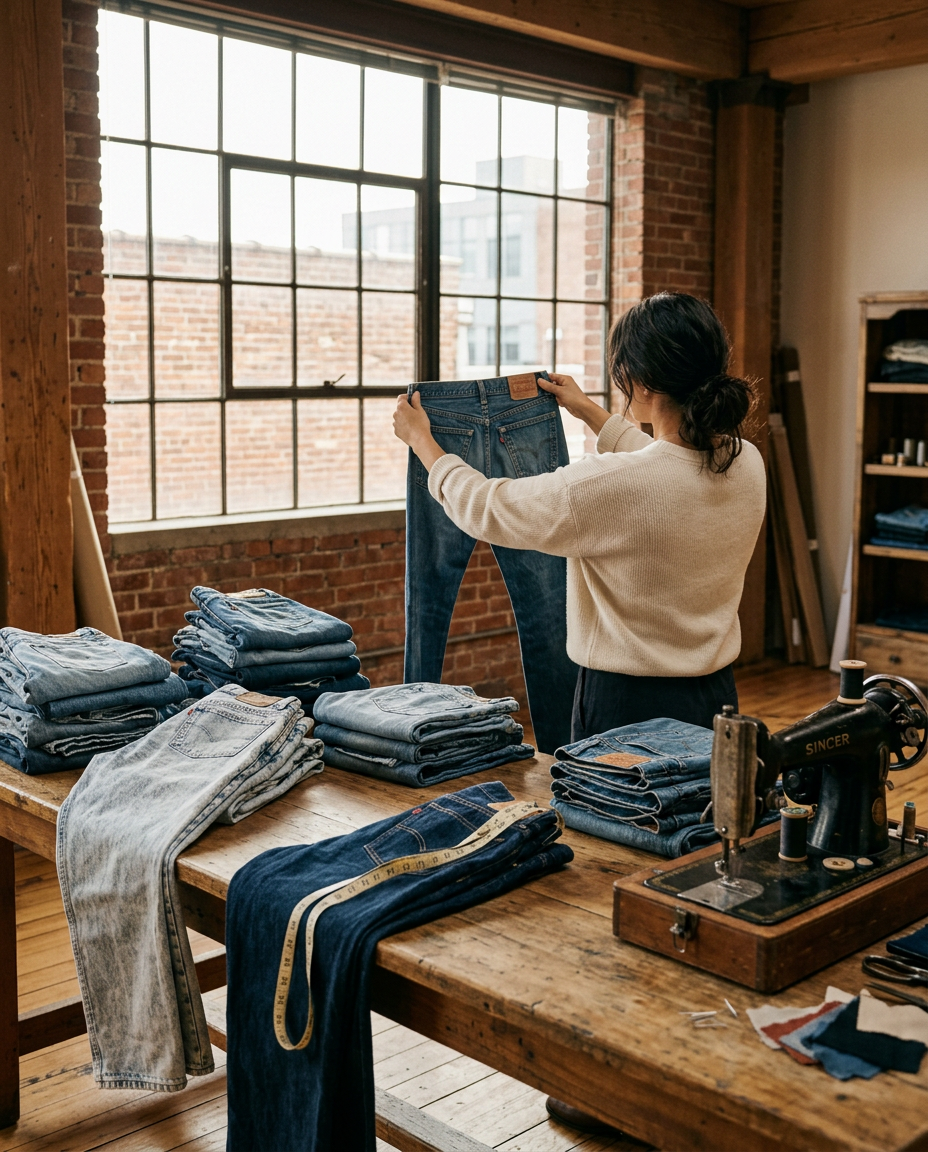
- Levi's: Vintage and modern denim are staples that never lose value and are easy to photograph and list.
- Zara and H&M: These are volume plays, perfect for 'Coastal Grandmother' or 'Coquette' aesthetic bundles.
- Vintage 90s/Y2K: Unbranded vintage pieces with the right 'look' often outperform modern brands in terms of profit-to-effort ratio.
How to process bulk inventory without burning out?
The secret to making the economics of $2-$4/piece women's wholesale cases work is a streamlined processing system. You cannot spend 30 minutes researching a $3 shirt. You need to move from box to rack to listing in under five minutes.
Three steps to efficient inventory processing
- The Triage Sort: Open the case and immediately sort items into three bins: 'High Value' (needs measurements), 'Standard Volume' (stock photos or quick shots), and 'Bundle/Lot' (to be sold together).
- Batch Photography: Use a consistent setup with a ring light and a clean backdrop. Photograph 50 items at a time to stay in the flow.
- Simplified Listing: Use templates for descriptions. Focus on the brand, size, material, and any flaws. Keywords like 'boho,' 'retro,' or 'streetwear' are more important than a poetic description.
Is the high-volume model better than the boutique model?
The high-volume model using $2-$4 units offers more financial stability than the high-end boutique model. When you rely on $100+ sales, a single return or a slow month can tank your cash flow. When you have 500 active listings sourced at $3 each, you are guaranteed daily sales that provide consistent liquidity. This liquidity allows you to reinvest in more cases, scaling your business faster than a seller who spends their weekends hunting through individual thrift store racks for one or two 'holy grail' items. In the Miami warehouse, we see the most successful entrepreneurs are those who embrace the math of the middle market.
What is the average profit margin on a $3 wholesale clothing unit?+
With an average sale price of $18 to $22 on platforms like Poshmark, a $3 unit typically yields a 400% to 600% ROI after platform fees and shipping.
How many items in a wholesale case are usually damaged?+
In a standard unmanifested wholesale case, expect a dud rate of approximately 5% to 10% for items that are unsellable due to major flaws.
Which platforms are best for selling $2-$4 wholesale inventory?+
Whatnot is ideal for high-volume auctions, while Poshmark and Depop are better for maximizing the individual value of brand-name pieces like Free People or Levi's.
Does buying in bulk include shipping costs in the per-unit price?+
Professional resellers always calculate the 'landed cost' by adding the shipping fee to the case price and dividing by the total number of units to get the true COGS.
Can I find vintage clothes in modern women's wholesale cases?+
Yes, many bulk cases contain a mix of modern labels and Y2K vintage pieces, which are currently high-demand items for the Gen Z demographic on Depop.
Runs the women's grading floor in the Miami warehouse and has personally touched over 400k pieces.