The True Economics of 2-4 Dollar Women's Wholesale Vintage and Modern Cases
- Resellers typically multiply their initial investment by four to six times when sourcing in the $2 to $4 wholesale price bracket.
- Low unit costs protect resellers from market fluctuations and high platform fees on sites like eBay and Poshmark.
- Inventory in this price range often includes high-turnover brands like Zara, Free People, and Levi's.
- Success in high-volume resale requires a focus on sell-through rate rather than just individual item profit.
- Buying at $2 to $4 per unit makes $15-$25 average sale prices highly sustainable for live sellers.
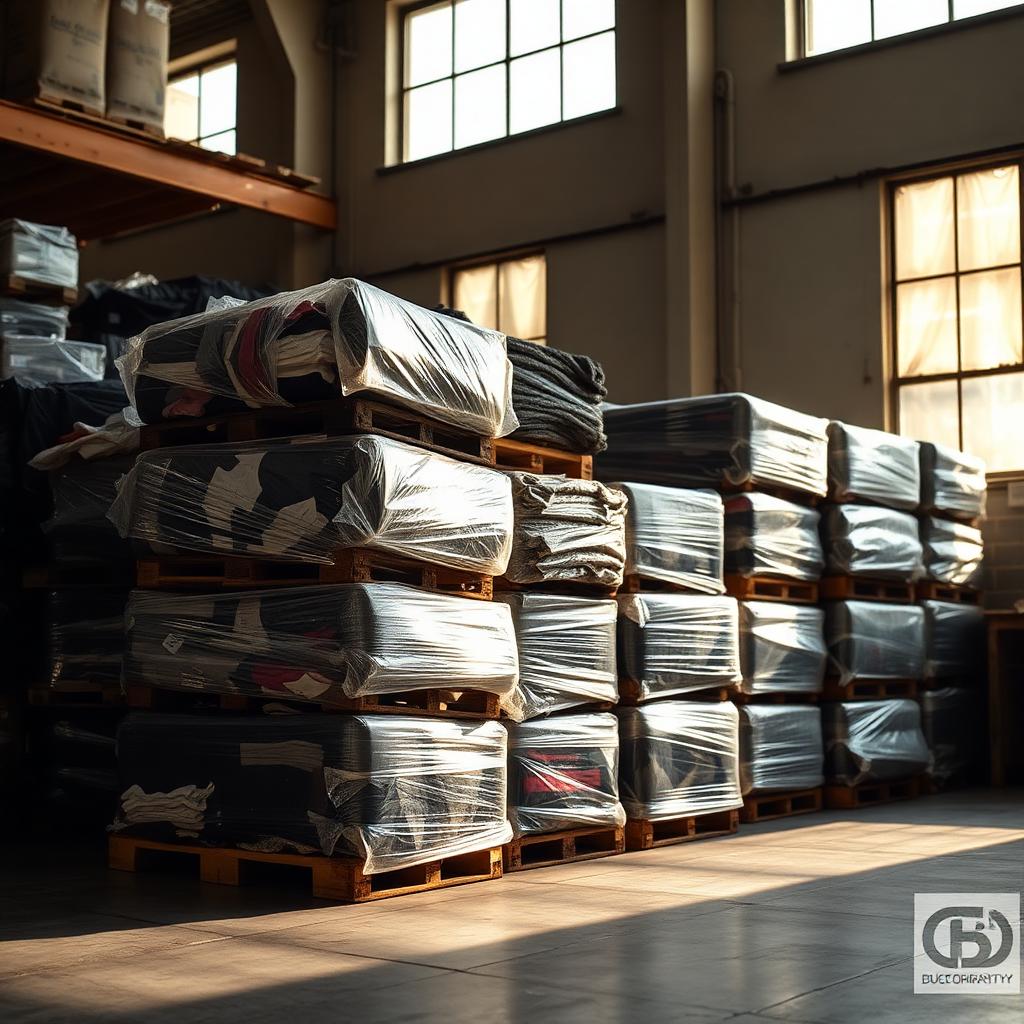
The economics of $2-$4 per piece women's wholesale cases center on the ability to achieve high-volume sell-through while maintaining a gross margin of at least 70% after platform fees. I have spent twelve years walking the concrete floors of liquidation warehouses and sorting through dusty estate sale bins, and the math remains the most beautiful part of this business. When you secure quality inventory at a two-dollar unit price, you eliminate the fear of a slow market. This price point represents the sweet spot between low-grade 'rag house' bales and overpriced boutique curated bundles, offering a gateway to scale for any thrift entrepreneur.
How does the $2-$4 per piece wholesale model generate profit?
The profitability of low-cost wholesale cases relies on a mathematical ratio where the acquisition cost is low enough to absorb shipping, platform fees, and marketing while leaving a significant surplus. In my experience, a case of 50 pieces bought at $3 per unit ($150 total) creates a diverse inventory pool that can be liquidated quickly. Even if 10% of the case is 'filler' or lower value, the remaining 90% typically fetches between $15 and $35 per item on Poshmark or Depop. The low barrier to entry allows a reseller to reinvest capital into two new cases for every one sold, creating an exponential growth loop.
Breaking down the resale margin ratio
To understand the economics, we must look at a typical unit breakdown for a $3 wholesale item sold for $22:
- Unit Cost: $3.00
- Shipping Inbound: $0.80
- Platform Fee (20%): $4.40
- Packaging/Labor: $1.00
- Net Profit: $12.80
This represents a 326% return on the initial unit investment. While a $50 vintage dress offers a higher dopamine hit, the $12 profit on a $3 item is what builds a sustainable, recession-proof business.
What brands and styles are found in $2-$4 wholesale cases?
Efficiency in this price bracket often comes from modern 'mall brands' and Y2K era vintage that possesses high aesthetic appeal but high market saturation. At TVF Women's, we see these cases filled with items that fit the 'coquette,' 'coastal grandmother,' or 'gorpcore' trends. These are not just labels; they are search terms that drive traffic. When you buy at this level, you are looking for brands with established search volume.
- Free People and Anthropologie: High demand for textures like lace, crochet, and velvet.
- Zara and H&M: Fast-moving basics and trend-heavy pieces for quick flips.
- Levi's and Vintage Denim: High-waisted 'mom' jeans and distressed styles that have a floor price of $25.
- Y2K Graphic Tees: 90s and early 2000s aesthetics that resonate with Gen Z buyers on Depop.
- Madewell: Staple pieces that maintain consistent value in the resale market.
Why is the $2-$4 price point ideal for Whatnot and live sellers?
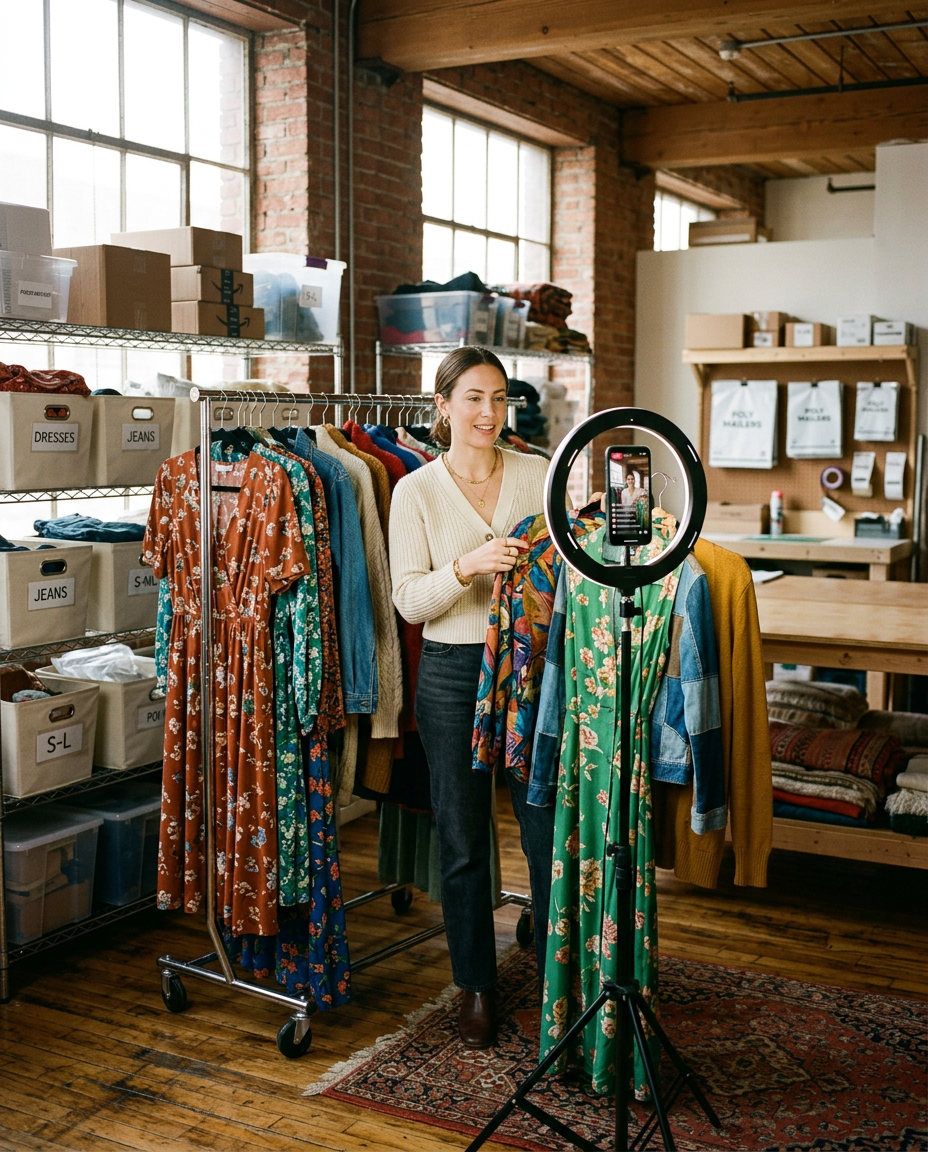
Live selling on platforms like Whatnot has revolutionized women's secondhand resale by requiring a constant stream of fresh inventory for 'sudden-death' auctions. When a seller starts an auction at $5, they must have a low enough cost basis to ensure they don't lose money. Sourcing at $2 to $4 per piece allows a live seller to start auctions at $10 or $15 with total confidence. This creates a high-energy environment where buyers feel they are getting a steal, while the seller is still pocketing a $5-$8 profit per minute of talk time.
The three-step process to scaling with wholesale cases
- Analyze the Sell-Through: Before buying a case, check the sold listings for the brands included to ensure a 60-day sell-through rate of at least 40%.
- Batch Processing: List the items in batches of 20 to 50 to trigger platform algorithms, especially on eBay and Poshmark.
- Revenue Reinvestment: Allocate 50% of gross profits back into purchasing larger wholesale volume to lower the per-piece ship cost.
Is $2-$4 wholesale better than traditional thrifting?
The primary advantage of wholesale cases over traditional thrifting at Goodwill or Salvation Army is the time-to-value ratio. A professional reseller's time is worth at least $50 per hour. If you spend five hours driving to four thrift stores to find 20 items, your 'hidden' cost per item is significantly higher than the sticker price. By ordering a wholesale case, you eliminate the hunt and focus entirely on the 'revenue-generating activities' of photography, listing, and shipping.
Comparison Table: Sourcing Methods
| Metric | Traditional Thrifting | $2-$4 Wholesale Cases |
|---|---|---|
| Average Unit Cost | $5.00 - $12.00 | $2.00 - $4.00 |
| Time Investment | High (hours of driving) | Low (delivery to door) |
| Predictability | Low (luck-based) | High (curated categories) |
| Scaling Potential | Limited by geography | Unlimited |
How to evaluate the quality of a wholesale supplier?
Not all wholesale is created equal. The economics of $2-$4 per piece women's wholesale cases only work if the 'manifest' or category mix is honest. A reliable supplier for women's secondhand apparel should have a clear policy on 'flawed' items and a consistent track record of providing brands like Urban Outfitters, Talbots, or Ann Taylor that have a proven secondary market. The provenance of the clothing matters; warehouse liquidations often provide cleaner, more modern inventory than high-volume rag houses that source from clothing drop boxes.
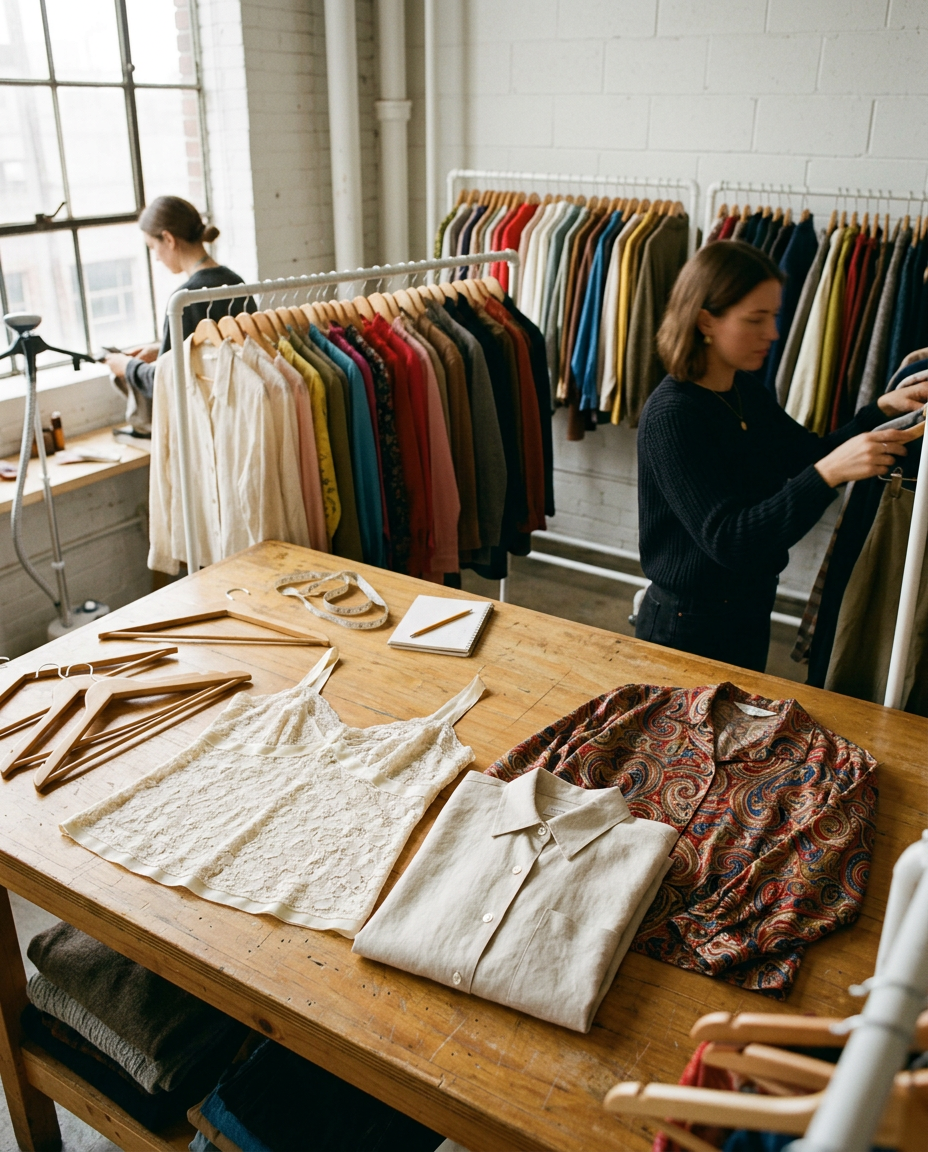
When we source at TVF Women's, we look for items that have architectural interest, quality fabrics like linen or silk, and labels that shoppers recognize instantly. The economics of the business are built on trust between the wholesaler and the reseller. If you can trust that every item in a 100-piece box has at least a $15 resale value, your business model becomes a simple game of volume and velocity.
What is the average profit margin on a $3 wholesale clothing item?+
A $3 wholesale item typically sells for $15 to $25, yielding a gross profit margin of approximately 60% to 80% after accounting for platform fees and shipping costs.
Can you find designer brands in $2-$4 wholesale cases?+
While rare, these cases frequently contain 'entry-level luxury' and high-end mall brands like Free People, Anthropologie, and Madewell, which offer excellent resale value.
Is buying wholesale clothing profitable for Poshmark sellers?+
Yes, buying wholesale is highly profitable for Poshmark sellers because the low cost per piece offsets Poshmark's 20% commission and allows for competitive pricing.
How many items are usually in a women's wholesale apparel case?+
Wholesale cases generally range from 25 to 100 pieces, with the $2 to $4 price point typically becoming more accessible at higher volumes like 50-count lots.
What is the best platform to sell bulk wholesale women's clothing?+
Whatnot is excellent for high-volume liquidation via live auctions, while Poshmark and Depop are better for maximizing the individual price of trend-focused pieces like Y2K or coquette styles.
Twelve years buying vintage women's wear across estate sales, flea circuits, and warehouse liquidations.