Scaling Whatnot Live Sales for Women's Secondhand Fashion

- Start auctions at lower price points to drive bid momentum and increase overall show viewership.
- Focus on high-demand brands like Free People and Levi's to ensure consistent sell-through during live events.
- Maintain a minimum run rate of 40 to 60 items per hour to optimize the platform algorithm.
- Diversify inventory with a mix of Y2K, coquette, and coastal grandmother aesthetics to capture different buyer demographics.
- Utilize bulk wholesale sourcing to keep the average cost of goods low enough for profitable $5 starts.
The most effective Whatnot live selling strategy for women's secondhand fashion is to prioritize inventory velocity over high individual margins to maximize total hourly profit. When you move from static platforms like Poshmark or eBay to a live format, you shift from a pull marketing model to a push model. Success on Whatnot is determined by your ability to keep an audience engaged through rapid-fire auctions and a curated flow of desirable inventory. You are no longer just a seller; you are a floor manager of a real-time digital auction house where momentum is your primary currency.
How do you optimize auction starting prices for women's fashion?
Setting the right starting price is the most critical decision in a live selling environment. Low starts, specifically $1 to $5 auctions, act as loss leaders that drive traffic and increase the likelihood of multi-item bundles. While a $1 start on a pair of Levi's 501s might feel risky, the resulting bidding war often pushes the final hammer price close to market value while keeping 200+ viewers in your room.
The psychological impact of the bidding war
Buyers on Whatnot are motivated by the thrill of the win. When you start an item at $15, you set a floor that can intimidate casual browsers. When you start at $1, you lower the barrier to entry, inviting more users to click the bid button. Once a user has bid, they are psychologically invested in the outcome. This competitive environment often results in sell-through rates exceeding 90% per show, which is unattainable on static marketplaces.
What are the best brands for Whatnot live sales?
Inventory selection for live shows differs significantly from Poshmark or Depop. You need brands with high name-brand recognition that require little explanation. The "bread and butter" of a successful Whatnot closet includes mid-tier contemporary brands that buyers recognize instantly.
- Free People: High demand for boho-chic and oversized silhouettes.
- Anthropologie: Consistent performance for dresses and unique knits.
- Levi's: Specifically vintage 501s, 505s, and high-waisted ribcage styles.
- Zara: Ideal for fast-fashion trends and Y2K aesthetic fillers.
- Lululemon: High velocity for activewear-specific shows.
Curating by aesthetic trends
Successful sellers organize their shows by "vibe" rather than just size. Running a "Coastal Grandmother" themed show allows you to bundle linen button-downs, cream sweaters, and straw accessories effectively. Similarly, a "Coquette" themed show focusing on lace, bows, and pastel vintage items will attract a specific subculture of buyers who are likely to bid on multiple items in a single session.
How to manage inventory sourcing for high-volume shows?
To maintain a consistent schedule of three to five shows per week, you cannot rely on traditional thrift store sourcing. The labor cost of driving to multiple locations to find 50 quality pieces per show is prohibitive. You must transition to wholesale sourcing or bulk lots to keep your pipeline full.
- Analyze your average cost of goods (COG): Your COG should stay between $3 and $7 per unit for standard auctions.
- Source by the bale or pallet: Buying bulk women's secondhand fashion ensures you have the volume to run 60-item shows without running out of stock.
- Tier your inventory: Assign high-value vintage items to "Grail" shows and use mid-tier wholesale inventory for daily high-volume shows.
- Pre-list everything: Accurate titles and sizes in the Whatnot shop before the show starts are essential for SEO and user searchability.
What metrics determine success in live selling?
I track my performance using three primary KPIs: Average Price Per Item (APPI), Items Per Hour (IPH), and New Follower Conversion. In my Brooklyn walk-up, I manage a flow of roughly 400 units per week.
| Metric | Target Goal | Impact |
|---|---|---|
| Items Per Hour | 45 - 60 units | Maximizes algorithm visibility |
| Average Sell-Through | 85% | Minimizes dead stock storage |
| Average Hammer Price | $18 - $24 | Ensures profitability over wholesale COG |
| Bundle Ratio | 2.5 items per box | Reduces shipping labor and supplies |
How do you build a loyal community on Whatnot?
Retention is cheaper than acquisition. A successful Whatnot live selling strategy includes a loyalty component where repeat buyers are recognized by name. Use the "Giveaway" feature strategically at the beginning of the show to boost your viewer count, but ensure the items being auctioned are the primary draw.
The importance of the 'Run of Show'
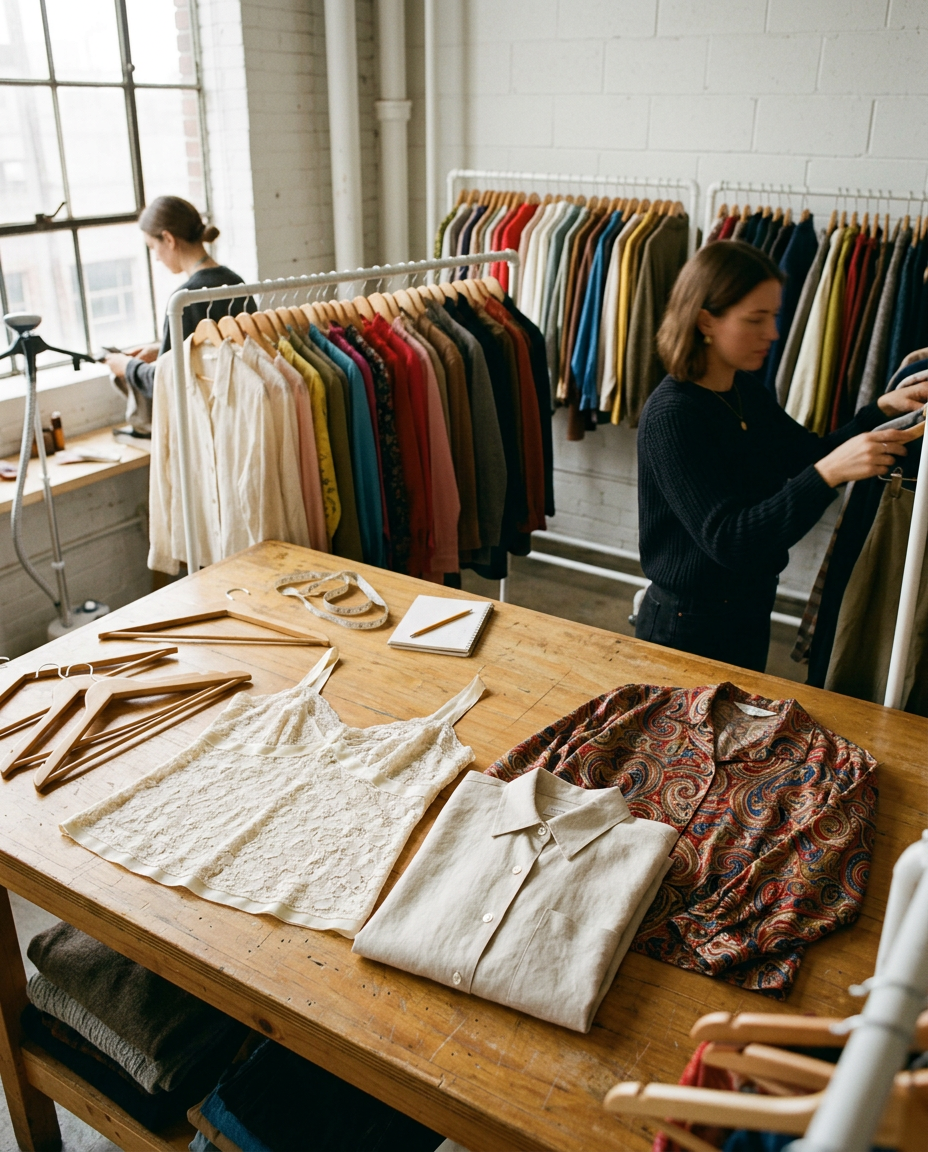
A prepared seller is a profitable seller. Organize your racks by size or category before hitting the 'Go Live' button. If you spend more than 20 seconds searching for an item, your viewer count will drop. Speed is a feature, not a bug. Keep the energy high, the descriptions brief, and the transitions seamless to maintain a high gross merchandise value (GMV) per minute.
What is the best time to go live on Whatnot for fashion?+
Data suggests that weekday evenings between 6:00 PM and 10:00 PM EST and weekend afternoons yield the highest engagement for women's secondhand fashion. Consistency is more important than the specific hour, as a regular schedule helps build a loyal following.
How many items should I have for a 2-hour Whatnot show?+
You should prepare between 80 and 120 items for a two-hour show to maintain a fast pace. Aiming for one item every 60 to 90 seconds ensures you maximize the number of bids and keep the audience engaged.
Is a $1 start strategy profitable on Whatnot?+
A $1 start strategy is profitable if your average cost of goods is low and you have a high enough viewer count to drive competitive bidding. This strategy works best for high-demand brands like Free People or Levi's where the market value is well-established.
How do I source enough inventory for daily live shows?+
Resellers should move toward bulk wholesale sourcing to maintain the volume required for daily shows. Buying women's fashion by the pallet or bale reduces the time spent sourcing and lowers the average cost per unit.
What equipment do I need for a professional Whatnot setup?+
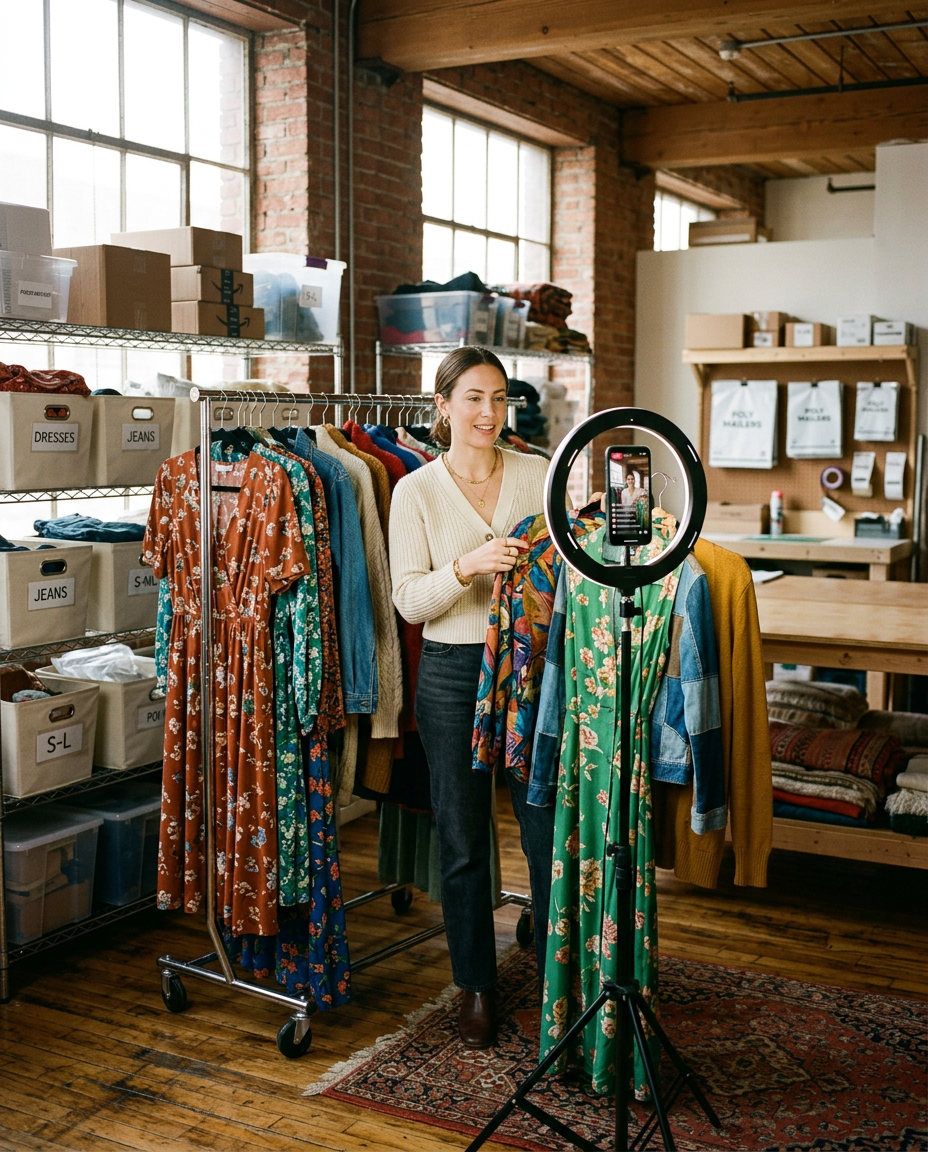
A professional setup requires a high-resolution smartphone, a stable tripod, and bright, neutral lighting like a ring light or softboxes. A clear background and a dedicated garment rack are essential for a streamlined presentation.
Runs a Poshmark closet doing $18k/mo in women's secondhand fashion out of a Brooklyn walk-up.