Avoiding Dead Stock: How to Maximize Sell-Through in Wholesale Women's Cases
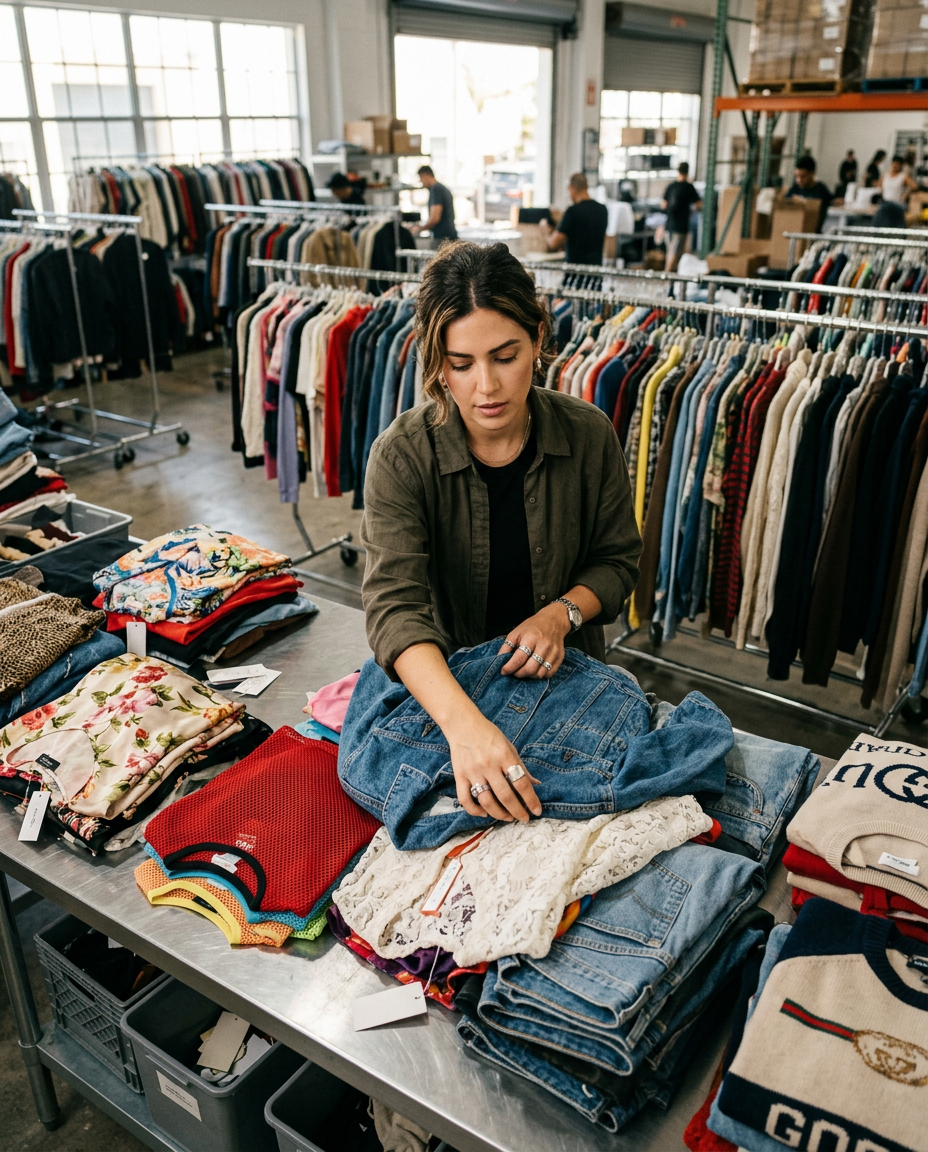
- Prioritize inventory with a proven sell-through rate of 60% or higher within the first 30 days of listing.
- Diversify wholesale cases to include a mix of bread-and-butter brands and high-margin vintage gems.
- Avoid dead inventory by sourcing specific aesthetics like Coquette, Gorpcore, and Coastal Grandmother that have active buyer intent.
- Maintain a strict 3:1 ROI ratio when purchasing wholesale women's secondhand cases to account for overhead and fees.
- Audit your inventory every 90 days to identify stagnant stock and implement aggressive discounting or bundling strategies.
Avoiding dead inventory in women's secondhand cases requires a disciplined sourcing strategy focused on high-demand aesthetics and data-backed sell-through rates. After touching over 400,000 pieces of clothing in my Miami warehouse, I can tell you that profit is made in the buy, not the sale. If you are buying based on what you think is 'cute' rather than what the market is actually searching for on Poshmark and Depop, you are already losing money.
How do you identify dead stock before buying a wholesale case?
Dead stock is inventory that remains unsold for more than six months and fails to recover its initial cost. In the women's secondhand market, this usually happens when a reseller buys a generic bulk mix without vetting the grade or category relevance. To avoid this, you must analyze the current sell-through rate for the specific brands and styles included in the case. A healthy wholesale case should contain at least 70% 'A-grade' inventory that aligns with trending keywords like Y2K, Gorpcore, or Coquette.
Retail arbitrage and wholesale sourcing are games of math. If a case costs you $500 for 100 pieces, your cost per unit is $5. If 30 of those pieces are 'dead'—meaning they are stained, out of style, or from brands like Lularoe that no longer move—your effective cost per unit for the sellable items jumps to $7.14. You must factor in this 'trash ratio' before you ever swipe your card.
Which brands currently avoid the dead inventory trap?
Not all labels are created equal in the resale economy. Certain 'bread-and-butter' brands have high liquidity, meaning they sell quickly even if the profit margin is modest. Brands from the URBN umbrella, such as Anthropologie and Free People, consistently maintain high search volume on platforms like Poshmark and eBay. Meanwhile, high-street brands like Zara and Aritzia move fast because of their modern cuts and social media relevance.
The power of aesthetic-based sourcing
Buyers today search by aesthetic rather than just brand. You can move unbranded vintage faster than mid-tier modern labels if the item fits a specific 'core' trend.
- Coquette: Think lace, bows, and pastel slips.
- Coastal Grandmother: Look for linen, white button-downs, and Eileen Fisher silhouettes.
- Gorpcore: Focus on functional outdoor wear like North Face or vintage Patagonia.
- Y2K: Low-rise denim, baby tees, and butterfly prints.
What is a realistic sell-through rate for women's secondhand cases?
In my experience, a successful reseller should aim for a 20% to 30% sell-through rate every 30 days. If you buy a case of 50 items, you should have at least 10 to 15 items sold within the first month. If you are hitting less than 10%, you have a sourcing problem, not a listing problem. The inventory is likely stale or priced incorrectly for the current market demand.
The 3:1 ROI Rule for Wholesale
To stay profitable and avoid the 'death pile' of inventory, follow this formula:
- Calculate Total Cost: Include the case price, shipping, and your labor time for processing.
- Estimate Gross Revenue: Research the low-end comp (comparable sale) for the brands in the case.
- Target the Ratio: Your estimated gross revenue should be at least 3x your total cost.
If a case costs $300, you need to be confident that you can generate $900 in gross sales. This covers the $300 cost, roughly $180 in platform fees (assuming a 20% average), and leaves you with $420 in gross profit before taxes. If the math doesn't hit 3:1, the risk of dead inventory is too high.
How to handle slow-moving inventory on Whatnot and Poshmark?
If you find yourself stuck with inventory that hasn't moved in 90 days, you must act aggressively. Liquidating slow-movers frees up capital to buy better-performing cases. On Whatnot, this might mean running 'dollar starts' to clear the floor. On Poshmark, it means utilizing the 'Bundle' feature to offer steep discounts to likes.
Steps to liquidate stagnant stock
- Re-photograph and Re-list: Sometimes a fresh cover photo is all a piece needs to get noticed by the algorithm.
- Bundle by Aesthetic: Group three 'Coastal Grandmother' pieces together for a single price point.
- Cross-list: If it isn't moving on Depop, move it to eBay where a different demographic shops.
- Bulk Liquidation: Sell your stale items as a 'mystery box' or 'reseller starter kit' at cost to recoup your capital.
Why does grading matter for inventory turnover?
Grading is the difference between a profitable quarter and a closet full of rags. At the warehouse, we grade for condition, but we also grade for 'relevance.' A vintage 90s floral dress is an A-grade item because it fits current trends. A 2015 business casual peplum top from a defunct mall brand is D-grade, even if it is brand new with tags. Avoid dead inventory by ensuring your supplier understands the difference between 'used clothing' and 'curated resale inventory.' If your supplier is just throwing weight into a box, you are buying their trash. If they are grading based on what actually sells in the current market, you are buying a business.
What is the fastest way to avoid dead inventory in women's secondhand cases?+
The fastest way to avoid dead inventory is to source by aesthetic trends like Y2K or Coquette and prioritize brands with high search volume such as Free People and Zara.
What is a good sell-through rate for clothing resellers?+
A healthy sell-through rate for clothing resellers is between 20% and 30% per month, meaning you sell about a quarter of your active listings every 30 days.
Which brands have the highest resale value on Poshmark?+
Brands like Anthropologie, Lululemon, Levi's, and vintage Harley Davidson currently maintain some of the highest resale demand and sell-through rates on Poshmark.
How do I calculate ROI on a wholesale clothing case?+
To calculate ROI, subtract the total cost of the case and shipping from your total gross sales, then divide by the total cost; aim for a 3:1 ratio.
What should I do with inventory that hasn't sold in 6 months?+
Inventory unsold after six months should be liquidated through dollar-start auctions on Whatnot, bundled for deep discounts, or donated to free up storage space.
Runs the women's grading floor in the Miami warehouse and has personally touched over 400k pieces.