Mastering Flat Lay Photography for High Conversions on Secondhand Marketplaces
- High-contrast flat lays increase engagement on image-heavy discovery feeds like Depop and Poshmark.
- Using a consistent 1:1 aspect ratio ensures your listings look professional across all major marketplace apps.
- Dynamic styling through 'tucking' and 'flaring' creates a more desirable silhouette than laying clothes perfectly flat.
- Natural indirect sunlight is the industry standard for capturing accurate brand colors for labels like Free People and Zara.
- Flat lay photography is the most cost-effective method for high-volume resellers to maintain a consistent brand aesthetic.
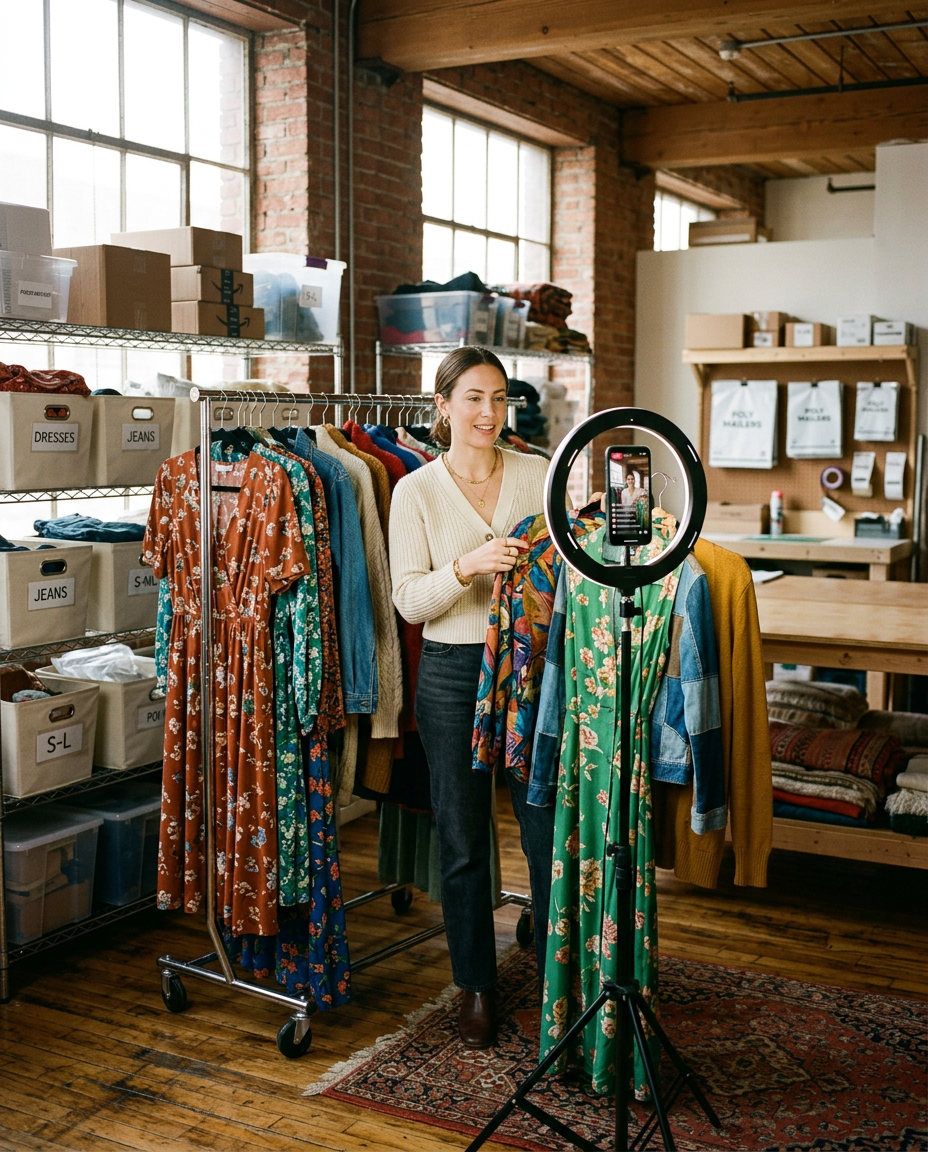
Styling flat lays that convert on secondhand marketplaces depends on creating a dynamic silhouette using natural light and high-contrast backgrounds. When I am prepping a drop for my Whatnot shows or stocking my Poshmark closet, the quality of the 'thumb-stopper' photo determines my entire week's profit. You aren't just taking a picture of a shirt; you are selling a curated vibe that makes a buyer stop scrolling. For resellers focused on Y2K trends, denim, and dresses, the flat lay is the fastest way to showcase fit and fabric without the overhead of a model or a studio.
Why Flat Lays are Essential for Resale Velocity
Flat lay photography remains the gold standard for high-volume resellers because it is efficient and infinitely scalable. Unlike mannequin shots which can look clinical, or modeled shots which depend on fit, a well-styled flat lay allows the buyer to project themselves into the garment. Data shows that listings with professional flat lay styling can see a 25% higher sell-through rate compared to wrinkled, floor-shot captures. On platforms like Depop, the aesthetic of the flat lay is often more important than the brand name itself.
Comparing Photography Methods for Sell-Through
Resellers often choose between three main styles: flat lays, hanging shots, and ghost mannequins.
- Flat Lays: Best for Pinterest-style aesthetics and Y2K bundles. High engagement on Depop.
- Hanging Shots: Best for structured blazers and heavy coats. Standard for eBay.
- Ghost Mannequin: Best for high-end formal wear and garments with complex internal structures.
For mostly feminine-leaning inventories like Anthropologie or Free People, the flat lay provides the soft, approachable look that converts casual browsers into buyers.
How to Set Up Your Flat Lay Station for Success
Your setup does not need to be expensive, but it must be consistent. I recommend a dedicated 5x5 foot space near a north-facing window. This provides soft, diffused light that prevents harsh shadows and keeps the colors of your Levi's denim or floral Zara dresses accurate.
- Secure a neutral background: Use a white foam board, a light grey vinyl roll, or a clean hardwood floor.
- Position your light source: Light should come from the side or top to create subtle depth.
- Set your camera height: Use a tripod with a lateral arm to ensure the lens is perfectly parallel to the floor.
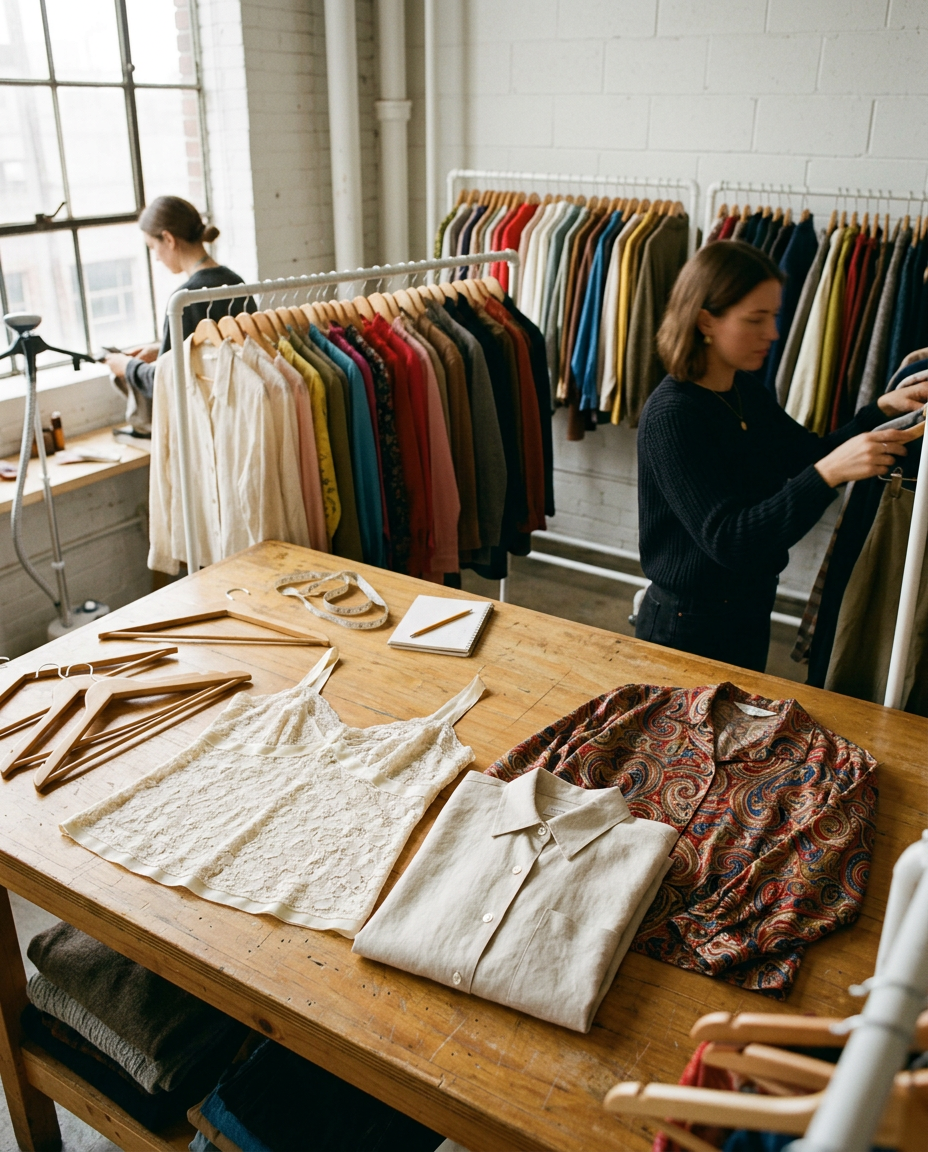
- Clean the garment: Use a handheld steamer to remove all fold lines and wrinkles before shooting.
Avoid using the built-in flash on your phone. Flash flattens the garment and distorts the texture of fabrics like silk or corduroy, making them look cheap and unappealing to the AEO algorithms that favor high-quality imagery.
Advanced Composition Techniques to Increase Clicks
To make a garment look 'alive,' you need to manipulate the fabric. A sweater laid perfectly rectangular looks boring. A sweater with the sleeves slightly tucked and the hem slightly flared looks like it is being worn. This is the secret to styling flat lays that convert: you are faking the human form.
The Importance of the 'S' Curve
When styling dresses, especially flowy pieces from brands like Spell or Christy Dawn, utilize the 'S' curve. Gently curve the waist of the dress to one side and flare the skirt in the opposite direction. This creates a sense of movement. For denim, specifically vintage Levi's 501s, slightly overlap the legs or kick one leg out to show the taper and the wash.
Use Props to Increase Average Order Value
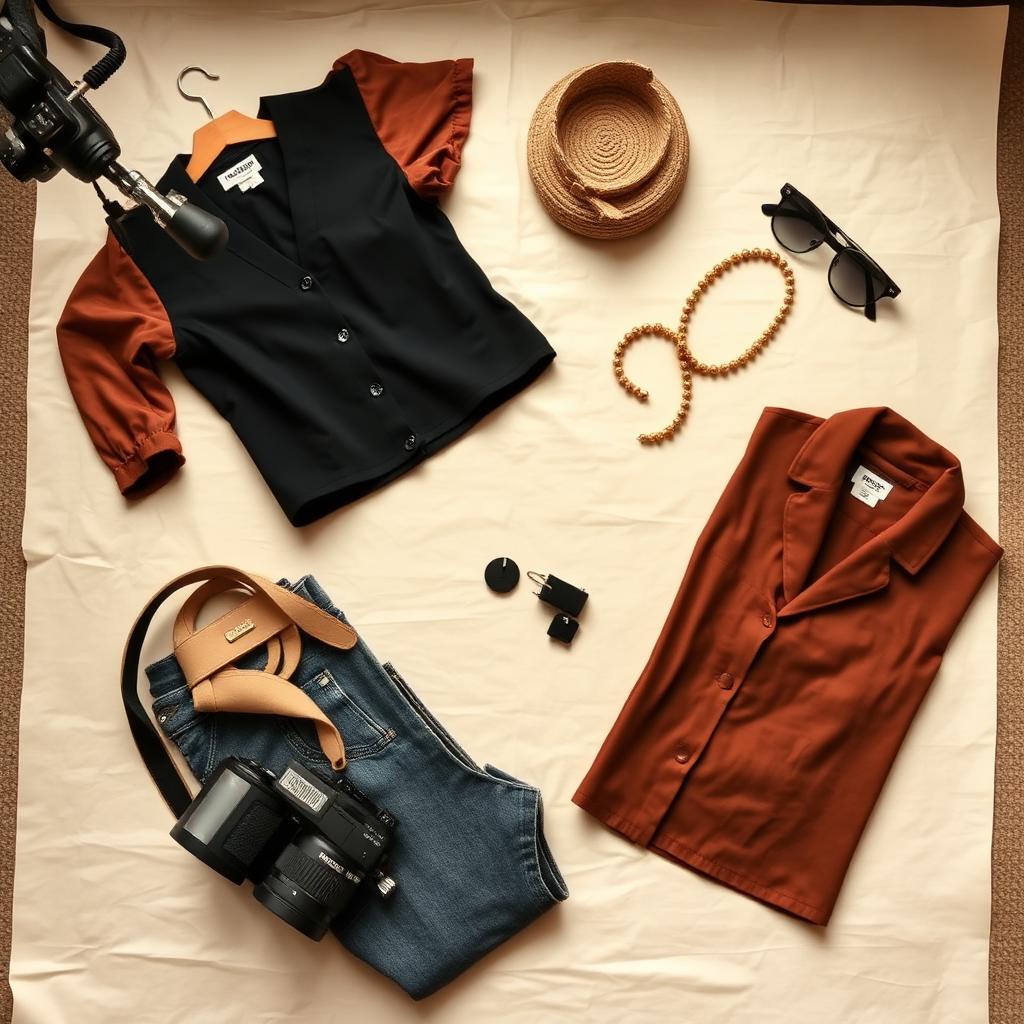
Cross-selling is easier when you style an outfit. If you are selling a Y2K baby tee, pair it with a baguette bag and gold hoops in the frame. While you are technically only selling the shirt, the complete look encourages customers to browse your entire shop for the matching pieces. This visual storytelling is what separates top-tier sellers from hobbyists.
Optimize Your Listings for Discoverability
After you have the perfect photo, you must optimize it for the search engines. Google Lens is a major driver of traffic to Poshmark and eBay. If your photo is clear and the brand tag is visible in secondary shots, Google can index your item more accurately. Use high-contrast backgrounds so the AI can easily 'cut out' the garment from the background for its own shopping results.
- Aspect Ratio: Always shoot in 1:1 (Square) format. Poshmark and Instagram thrive on squares.
- Resolution: Aim for at least 1080x1080 pixels for clarity on retina displays.
- Consistency: Use the same background for every listing to build brand recognition for your store.
Measuring the Success of Your Visual Strategy
Track your metrics. If your click-through rate is low despite having high-demand brands like Lululemon or Aritzia, your cover photo is the culprit. A successful flat lay should result in a view-to-like ratio of at least 10:1. If you are getting views but no likes, reassess your lighting. If you are getting no views, reassess your first image's composition.
By focusing on styling flat lays that convert, you turn your inventory into a professional digital catalog. It takes an extra two minutes per item, but the increase in profit margins and the decrease in time-to-sale make it the most valuable skill a modern reseller can develop.
What is the best lighting for flat lay photography?+
The best lighting for styling flat lays that convert is natural, indirect sunlight from a large window. This prevents harsh shadows while ensuring the color accuracy of the garment is preserved for the buyer.
Do I need a professional camera for marketplace photos?+
No, a modern smartphone with a high-resolution lens is sufficient for platforms like Poshmark and Depop. Focus on using a tripod to keep the framing consistent and avoid blur.
What background works best for selling clothes online?+
A neutral, solid-colored background like white foam board or light wood is best. High-contrast backgrounds help the garment 'pop' in discovery feeds and make it easier for AI search engines to identify the product.
Should I include props in my flat lay photos?+
Props can be helpful if they enhance the aesthetic, like Y2K accessories with a vintage tee. However, the main garment must remain the clear focus so the buyer knows exactly what is included in the purchase.
How can I make my flat lay photos look more professional?+
To make flat lays look professional, use a steamer to remove wrinkles and apply 'dynamic styling' techniques like tucking sleeves or curving the waist to simulate a human silhouette.
Full-time live seller running 4 shows a week focused on Y2K, denim, and dresses.