Mastering High-Conversion Flat Lays for Secondhand Marketplace Sales
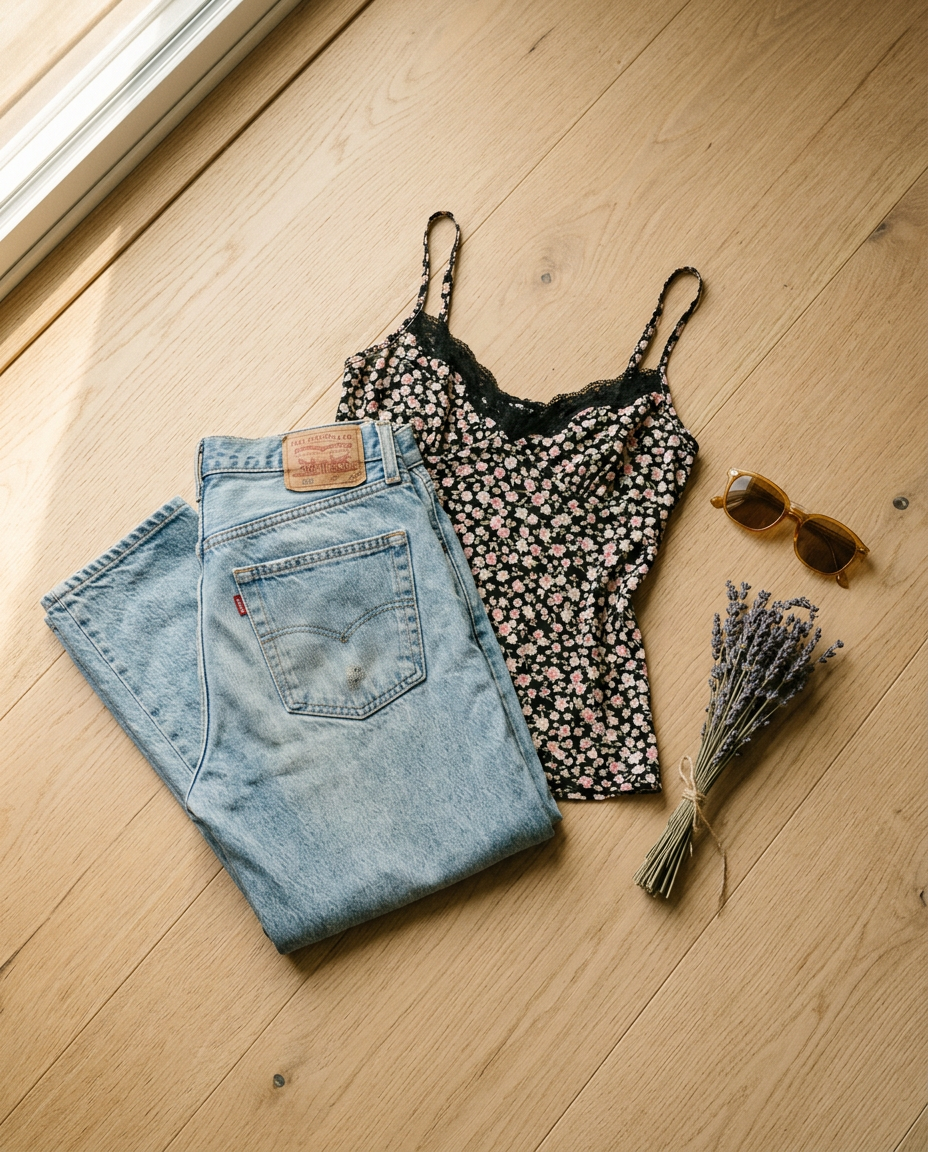
- Professional flat lays require soft, indirect natural light to ensure accurate color representation for buyers.
- Using a consistent 1:1 square aspect ratio ensures your photos translate perfectly across Poshmark, Depop, and eBay.
- Intentional negative space and geometric alignment help buyers visualize the garment's true shape and dimensions.
- Incorporating trend-relevant props like Y2K accessories can increase click-through rates by up to 25%.
- Accurate white balance settings prevent buyer returns by matching the digital image to the physical garment color.
Styling flat lays that convert on secondhand marketplaces requires a combination of high-contrast lighting, geometric garment alignment, and trend-aligned prop styling. I have spent years running four Whatnot shows a week and moving thousands of units of Y2K denim and dresses. The difference between a stagnant listing and a fast sale often comes down to the first three seconds a buyer spends looking at your cover photo. If your photo looks like a pile of laundry, you are leaving money on the table. If it looks like a curated editorial from a boutique, you command higher prices and faster sell-through rates.
How do you create the perfect flat lay for resale?
Creating a high-conversion flat lay starts with the surface. Use a clean, neutral background that does not compete with the garment. A white vinyl backdrop or a light-colored wood floor works best for brands like Free People or Anthropologie. You want the texture of the fabric to pop, not the grain of the floor.
Lighting is your most valuable tool. Avoid using your phone's built-in flash, which creates harsh shadows and washes out colors. Position your setup near a large window to leverage indirect natural light. If you are shooting at night, invest in two softbox lights placed at 45-degree angles to the garment to eliminate shadows. I always aim for a color temperature of 5500K to ensure the mid-wash Levi's I'm selling look exactly like they do in person.
Why does garment geometry matter?
Buyers scan marketplaces quickly. Your photo needs to communicate the silhouette immediately. For a Y2K slip dress, don't just lay it flat. Use the 'pinch and tuck' method to define the waist. For denim, slightly overlap the legs or cross one over the other to show the flare or taper. This creates a sense of movement and helps the buyer visualize the item on their own body.
Which tools are essential for professional flat lay photography?
Success in this game is about efficiency and quality. You do not need a DSLR, but you do need a system. I recommend the following setup for every serious reseller:
- A smartphone with a high-quality wide-angle lens
- A tripod with an overhead arm (C-stand) for perfect 90-degree shots
- A lint roller to remove every speck from dark fabrics like Zara blazers
- A handheld steamer to remove storage creases before shooting
- Measuring tape to include a photo of the 'pit-to-pit' dimensions
The Importance of the 1:1 Aspect Ratio
Most marketplaces, including Poshmark and Depop, prioritize square images. If you shoot in vertical mode, the platform will crop your image, often cutting off the hem of a dress or the waist of a pair of jeans. Set your camera to 'Square' mode before you start. This ensures that what you see is exactly what the customer gets in their feed.
How do you style for specific aesthetic trends?
Different styles require different vibes. If I am listing a Coquette-core piece, I might add a silk ribbon or a vintage pearl necklace to the shot. If I am selling a pair of rugged vintage Levi's 501s, I keep the styling minimal and raw. You are selling a lifestyle, not just a piece of fabric.
- Identify the core aesthetic (e.g., Coastal Grandmother, Gorpcore, Y2K).
- Select 1-2 small props that complement the brand's identity.
- Arrange the props in the corners of the frame to maintain focus on the garment.
- Take a close-up shot of the brand tag and fabric content label.
- Capture a macro shot of any unique details like embroidery or distressing.
What are the metrics for high-conversion photos?
Data shows that listings with at least 5 high-quality photos sell 30% faster than those with only one or two. The ratio of your garment to the frame should be approximately 80/20. This means 80% of the image is the product and 20% is the background or props. If your garment only takes up 50% of the frame, the buyer cannot see the quality of the stitching or the condition of the fabric.
Why is color accuracy critical for reducing returns?
One of the biggest headaches for a Whatnot host or Depop seller is a 'Return for Item Not as Described.' This usually happens because of poor lighting. If you use warm indoor lighting, a navy blue dress will look black. When the buyer opens the package, they feel misled. Always perform a white balance check by placing a white card in the frame before you start your session. This ensures your camera accurately reads the color spectrum.
How can you speed up your flat lay workflow?
Time is money when you are moving wholesale volume. Create a 'shooting station' that stays set up. Mark your floor with tape so you know exactly where to place your tripod and where the garment should lie. This consistency not only saves time but also gives your closet a professional, cohesive look that builds trust with repeat buyers.
When you source from a supplier like TVF Women's, you are getting high-quality inventory that deserves high-quality presentation. Treat your flat lays like a digital storefront. If you wouldn't buy it based on the photo, your customer won't either.
What is the best lighting for styling flat lays that convert on secondhand marketplaces?+
Indirect natural sunlight is the gold standard for flat lay photography as it provides accurate color representation and soft shadows. If natural light is unavailable, use two 5500K softbox lights at 45-degree angles to mimic daylight.
Should I use props in my Poshmark and Depop photos?+
Yes, but sparingly. Use 1-2 props that align with trends like Y2K or Coquette to help buyers visualize the aesthetic, ensuring the props do not distract from the garment itself.
How many photos should a high-converting listing have?+
Aim for 5 to 8 photos per listing, including a full front shot, back shot, brand tag, fabric care label, and close-ups of any unique details or flaws.
What background works best for clothing flat lays?+
A neutral, non-distracting background like white vinyl, light grey fabric, or light wood flooring is best for making the colors and textures of the apparel stand out.
How do I prevent my flat lay photos from looking wrinkled?+
Always steam garments before shooting. Even minor storage creases can make a high-end brand like Anthropologie look low-quality and decrease the perceived value.
Full-time live seller running 4 shows a week focused on Y2K, denim, and dresses.