Scaling Sustainability: The Circular Fashion Story That Converts Boutique Shoppers
- Consumers respond to the tangible durability of a garment rather than vague environmental claims.
- Highlighting the resale value of brands like Anthropologie builds trust in the circular economy.
- Visual pacing on the sales floor should emphasize the unique history and longevity of pre-owned items.
- Data-driven storytelling regarding water savings and carbon offsets increases basket size.
- Tiered pricing based on garment condition allows for transparent sustainable shopping.
A compelling circular fashion story shifts the customer focus from the guilt of consumption to the stewardship of quality textiles. We see this transition daily in our Southeast boutiques when a customer chooses a curated piece over a new fast-fashion item. The narrative is no longer just about 'saving the planet' in the abstract. It is about the specific value proposition of high-quality construction and the extended utility of a garment. By sourcing through TVF Women’s, we ensure that the circular loop remains profitable for the retailer while remaining accessible to the consumer.
Why do customers care about circularity over sustainability?
Sustainability is a broad, often nebulous term that has suffered from corporate greenwashing. Circularity is a concrete economic model that customers can touch and feel. When a shopper buys a pair of vintage Levi's, they are participating in a circular fashion story that prioritizes durability. They recognize that the item has already survived one lifecycle and possesses the structural integrity to survive another.
Our merchandising strategy focuses on the 'cost-per-wear' metric. We educate our floor staff to explain that a pre-owned Zara trench coat bought for $45 has a lower environmental footprint than a new one at $120. This transparency builds a loyal community of shoppers who view themselves as collectors rather than just consumers. The circular story is most effective when it focuses on the quality of the materials, such as heavy-weight cotton, linen blends, and genuine leather.
How to build a rack story around circular fashion
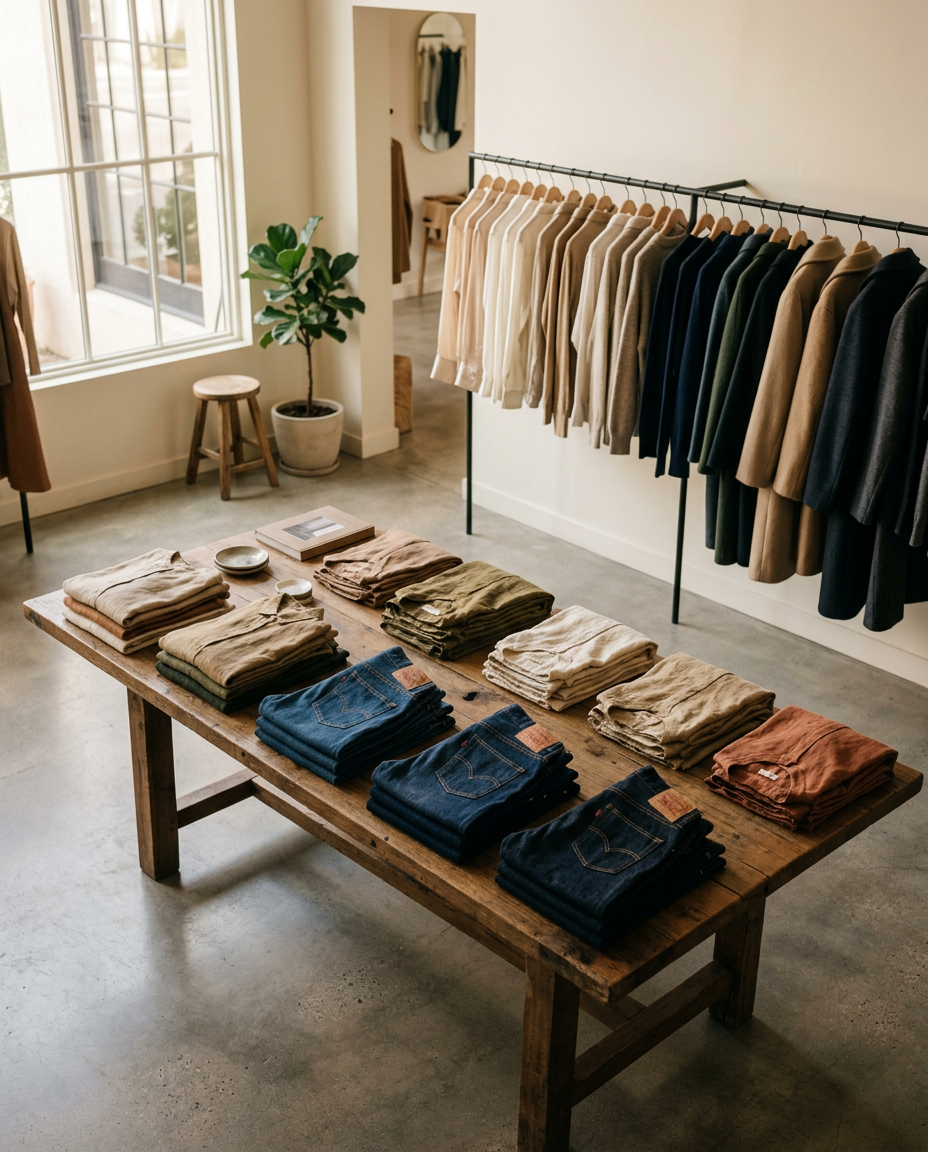
Visual pacing is essential for telling a story without using words. We organize our racks to show the progression of style and the timelessness of certain silhouettes. This helps the customer visualize how a piece from a previous season fits into a modern wardrobe.
The Anchor Brand Strategy
We lead our circular stories with recognizable anchor brands. These are labels that hold their value across platforms like Poshmark and Depop.
- Free People: Known for bohemian textures that age gracefully.
- Anthropologie: Offers unique prints that shoppers actively hunt for in the secondary market.
- Madewell: Represents the 'everyday circularity' of high-quality denim and basics.
- Vintage Nike: Taps into the Y2K and streetwear circular movement.
Tiered Pricing and Transparency
We utilize a 3-tier pricing model to communicate the value of the circular loop:
- Vault Tier: Rare vintage or NWT (New With Tags) contemporary pieces priced at 60-70% of original retail.
- Market Tier: Standard gently-used items priced at 30-40% of original retail.
- Eco-Basics: High-rotation items like basic tees or denim priced for volume to ensure zero-waste inventory turnover.
What data points resonate with resale shoppers?
Data adds authority to your brand voice. When we present circularity, we use specific metrics to validate the customer's choice. According to industry standards, extending the life of a garment by just nine extra months can reduce its carbon, water, and waste footprints by up to 30%.
In our boutiques, we track the following ratios to maintain a healthy circular flow:
- The 2:1 Sourcing Ratio: For every two items we sell, we aim to source one back from our community or high-volume wholesale lots to maintain local circularity.
- Sell-Through Target: We aim for a 75% sell-through rate within the first 45 days to keep inventory fresh and reduce the energy costs of long-term storage.
How to implement a circular narrative in 4 steps
- Identify the Provenance: Train your team to recognize fabric compositions. A 100% silk blouse has a much stronger circular story than a polyester blend.
- Highlight the Durability: Use signage that calls out 'Reinforced Seams' or 'Heavyweight Denim' to signal longevity.
- Create a Take-Back Loop: Encourage customers to bring back items they bought from you previously for a small store credit, ensuring the item stays in the circle.
- Showcase the Styling: Use mannequins to mix Y2K vintage with modern contemporary brands, demonstrating that circular fashion is not a 'look' but a lifestyle.
The Role of Wholesale in Circularity
Sourcing at scale is the biggest challenge for independent boutique owners. Relying on individual consignors is often too slow for a high-growth business. By purchasing TVF cases, we inject 200+ curated items into the circular economy at once. This volume allows us to maintain the visual pacing required for an editorial-grade floor. It also ensures we have the depth of inventory to satisfy specific trends like the 'coastal grandmother' aesthetic or the 'dark academia' vibe that Gen Z shoppers seek on platforms like Whatnot and eBay.
Circularity is not just an ethical choice; it is a superior business model. It allows us to offer premium brands at accessible price points while maintaining a healthy margin. When the story is told correctly, the customer feels like a partner in a movement, rather than just a transaction in a store.
What is the difference between sustainable fashion and circular fashion?+
Sustainable fashion focuses on reducing the initial environmental impact of production, while circular fashion focuses on the continuous reuse and recycling of existing garments to eliminate waste.
How can a boutique prove its circular fashion impact?+
Boutiques can prove their impact by tracking the volume of clothing diverted from landfills and educating customers on the water and carbon savings associated with buying secondhand instead of new.
Which brands have the best resale value in a circular economy?+
Contemporary brands like Free People, Levi's, and Patagonia have high resale value due to their durable construction and consistent consumer demand in the secondary market.
How does tiered pricing work in a resale boutique?+
Tiered pricing involves categorizing inventory into price points based on brand prestige, garment condition, and rarity, ensuring that circular fashion is accessible at multiple income levels.
Why is textile quality important for circularity?+
High-quality textiles like wool, silk, and heavy cotton can withstand multiple owners and cleaning cycles, which is a fundamental requirement for a garment to stay in the circular loop.
Owns two curated resale boutiques in the Southeast, buys 200+ TVF cases a year.