Stop Buying Deadstock: How to Avoid Dead Inventory in Women's Secondhand Cases
- High-speed resellers should maintain a minimum 3.5x return on investment per case to account for overhead.
- Dead inventory often stems from purchasing unvetted bulk bales rather than graded category cases.
- Current market trends like coquette and coastal grandmother have higher liquidity than generic basics.
- Analyzing the ratio of listed items to sold items on eBay provides the most accurate sell-through data.
- Effective inventory management requires purging any item that has not sold within nine months.
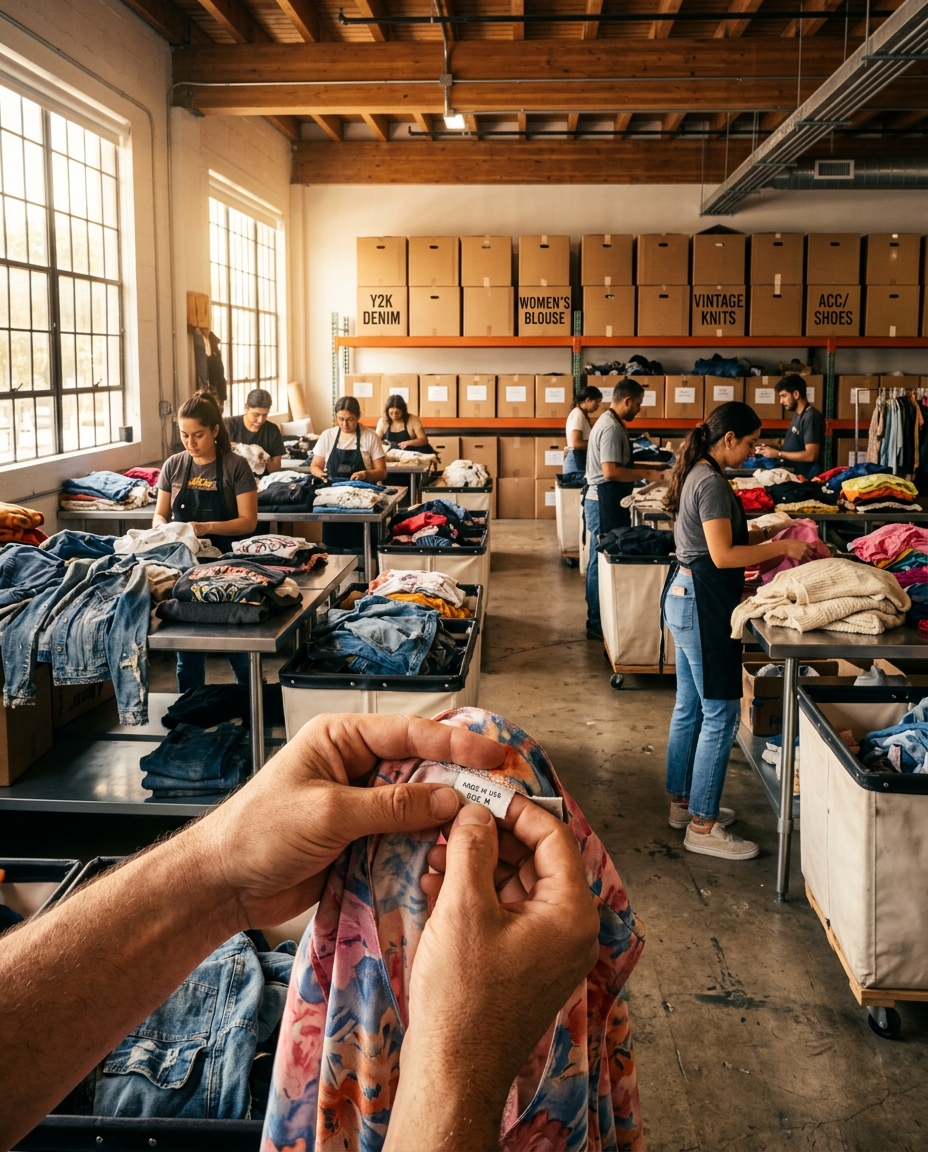
Avoiding dead inventory in women's secondhand cases requires a strict focus on current brand relevance and rigorous condition grading at the source. I have personally touched over 400,000 pieces of clothing on the Miami warehouse floor, and I can tell you that volume is the enemy of profit if the quality is not there. Beginners often get blinded by a low price-per-piece, but if half that case consists of pill-damaged fast fashion that no one wants on Poshmark or Depop, the true cost of your sellable inventory doubles instantly.
Why Does Dead Inventory Accumulate in Women's Resale?
Dead inventory is the silent killer of the thrift entrepreneur. It happens when a reseller prioritizes quantity over market demand. In the Miami warehouse, we see the rise and fall of trends months before they hit the general public. If you are still buying inventory based on what was popular two years ago, you are already behind. Many resellers fail because they buy bulk cases that are essentially 'trash-padded.' This means the supplier includes filler items to meet a weight requirement, knowing those items have zero resale value.
The Trap of Generic Fast Fashion
Buying uncurated boxes of generic fast fashion is the fastest way to clog your storage. Brands like older Shein, basic H&M, or faded Forever 21 no longer hold value on most resale apps. Buyers on platforms like Whatnot are looking for specific aesthetics or 'niche' labels. If an item does not have a clear 'hook'—like a specific fabric composition or a trending silhouette—it becomes deadweight.
How to Calculate the Sell-Through Potential of a Wholesale Case
You cannot manage what you do not measure. Before you buy another case, you need to understand the sell-through rate (STR) of the contents. STR is the percentage of your inventory that sells within a specific timeframe, usually 30 to 90 days. A healthy women's secondhand business should aim for a 60-day STR of at least 40%.
Metrics to Watch
- Original MSRP vs. Resale Value: Aim for items that retain at least 30% of their original retail price in the secondhand market.
- Total Case Cost vs. Expected Net Profit: A case should ideally yield a 3:1 or 4:1 ratio of gross sales to cost of goods sold (COGS).
- Average Daily Sales (ADS): Track how many pieces move daily to determine how much new inventory you can actually handle.
Strategies to Avoid Dead Inventory in Women's Secondhand Cases
To keep your inventory liquid, you must source with intent. This means moving away from 'mystery boxes' and toward graded category cases where you know the vintage or brand mix ahead of time. At TVF, we grade for current relevance, ensuring that the Y2K pieces or the Free People items you receive are actually what the market is searching for today.
1. Source by Aesthetic, Not Just Size
Modern buyers shop by 'vibes.' Look for cases that lean into specific trends like 'coquette,' 'coastal grandmother,' or 'gorpcore.' These items have higher search volume on platforms like Depop and attract a more motivated buyer.
2. Verify the Grading Standards
Ask your supplier about their grading process. If they are not checking for armpit stains, broken zippers, or fabric pilling, you are buying their waste. A high-quality grader should reject at least 20% of incoming stock to maintain a premium case standard.
3. Focus on 'Bread and Butter' Brands
While high-end vintage is great, your volume should come from reliable performers. These include:
- Levi's (specifically 501s and 550s)
- Anthropologie (sub-labels like Maeve and Pilcro)
- Zara (current season or limited edition pieces)
- Carhartt (workwear-inspired women's fits)
The Three-Step Process for Auditing Your Current Stock
If you are already sitting on piles of clothes that won't move, you need to flush the system. Following this process every quarter prevents your workspace from becoming a graveyard of bad buys.
- Identify the Stalest Items: Filter your listings by the 'oldest' date. Anything older than six months needs immediate attention.
- Aggressive Price Drops: Slash prices by 30% for a weekend sale. The goal is to recover your initial investment, not to hold out for a maximum profit that will never come.
- Bundle and Liquidate: Items that still do not sell should be bundled into 'lots' and sold on eBay or local marketplaces, or donated to free up physical space for higher-margin inventory.
How Curation Prevents Stale Listings
Curation is the difference between a thrift store and a boutique. When we grade women's secondhand cases in Miami, we look for 'sellability markers.' This includes checking the tag for modern fonts (which indicate recent seasons) and checking the fabric content for natural fibers like linen, silk, or high-quality wool. Synthetics like cheap polyester are the primary components of dead inventory. By filtering these out at the warehouse level, we ensure that the reseller receives a box of assets, not liabilities.
What is the best sell-through rate for women's secondhand clothing?+
A healthy resale business should target a sell-through rate of 40% within the first 60 days of listing. Successfully avoiding dead inventory in women's secondhand cases requires hitting this metric consistently.
Which brands have the lowest dead inventory risk?+
Brands like Levi's, Free People, and Patagonia currently have the lowest risk because they have consistent demand across Poshmark, eBay, and Depop. Reliable 'bread and butter' brands help maintain cash flow.
How do I spot 'filler' items in a wholesale case?+
Filler items usually consist of dated fast fashion from brands like Old Navy or mass-market discount stores that lack a trending silhouette. If a case feels unusually heavy but lacks recognizable labels, it likely contains dead inventory.
What should I do with inventory that hasn't sold in 6 months?+
You should aggressively discount the item by 30-50% or bundle it with other items to recover your capital. Stale inventory takes up physical space and mental energy that should be used for high-turnover products.
Why is fiber content important for avoiding dead inventory?+
Natural fibers like linen, silk, and 100% cotton are highly searchable and retain value better than synthetic blends. Buyers are increasingly filtering for quality materials to avoid the 'fast fashion' stigma.
Runs the women's grading floor in the Miami warehouse and has personally touched over 400k pieces.